Milan, May 2026
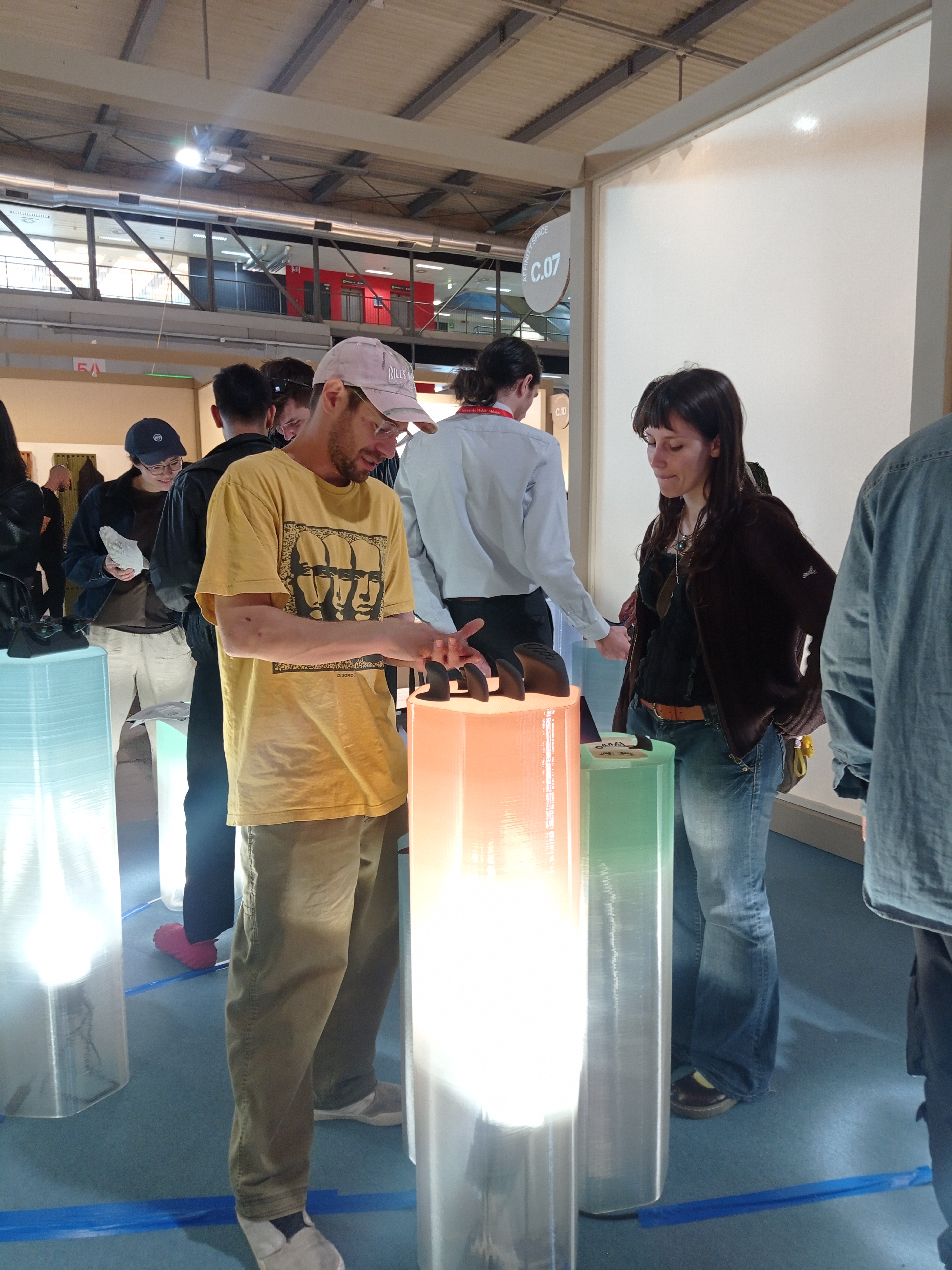
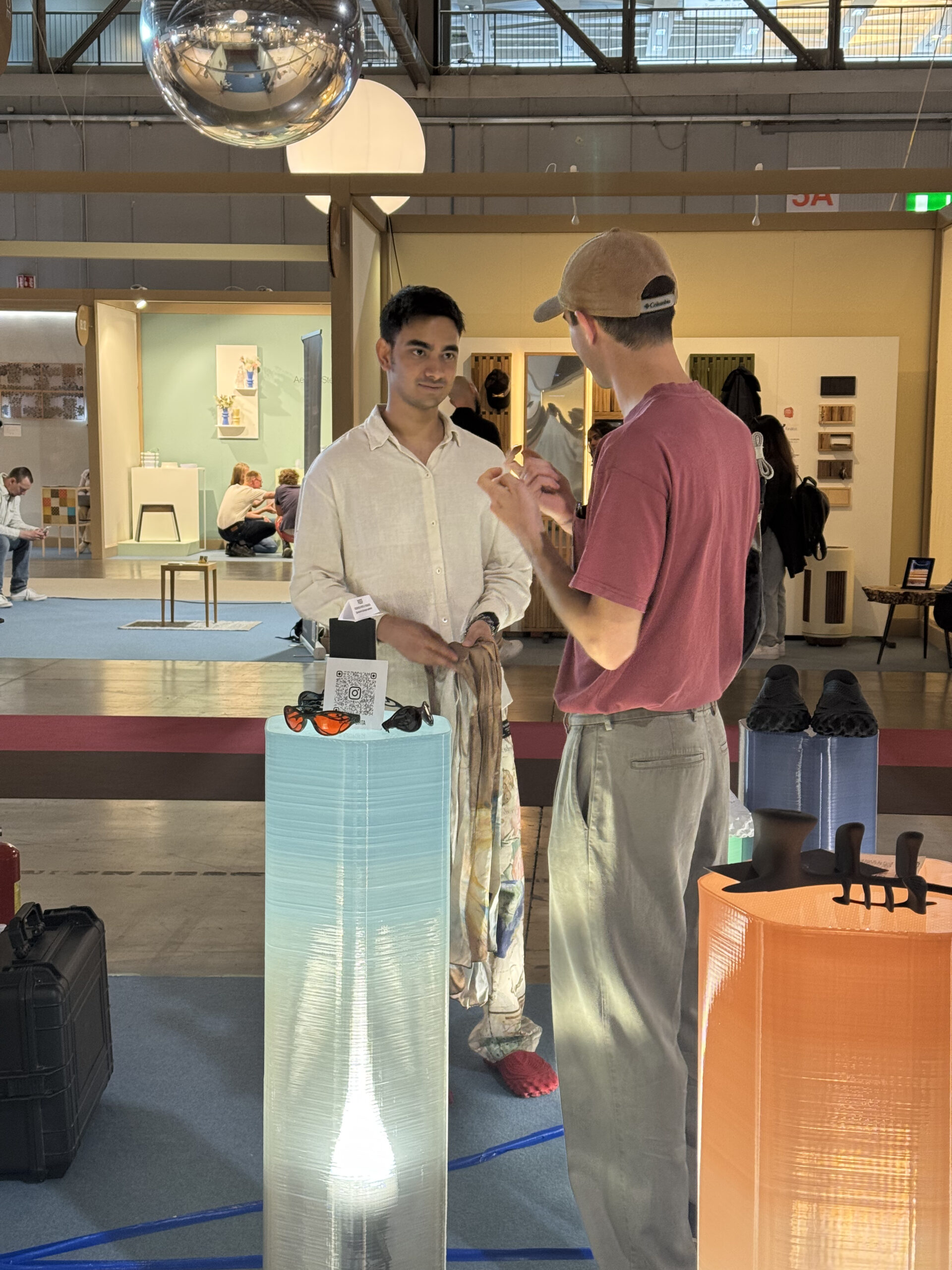
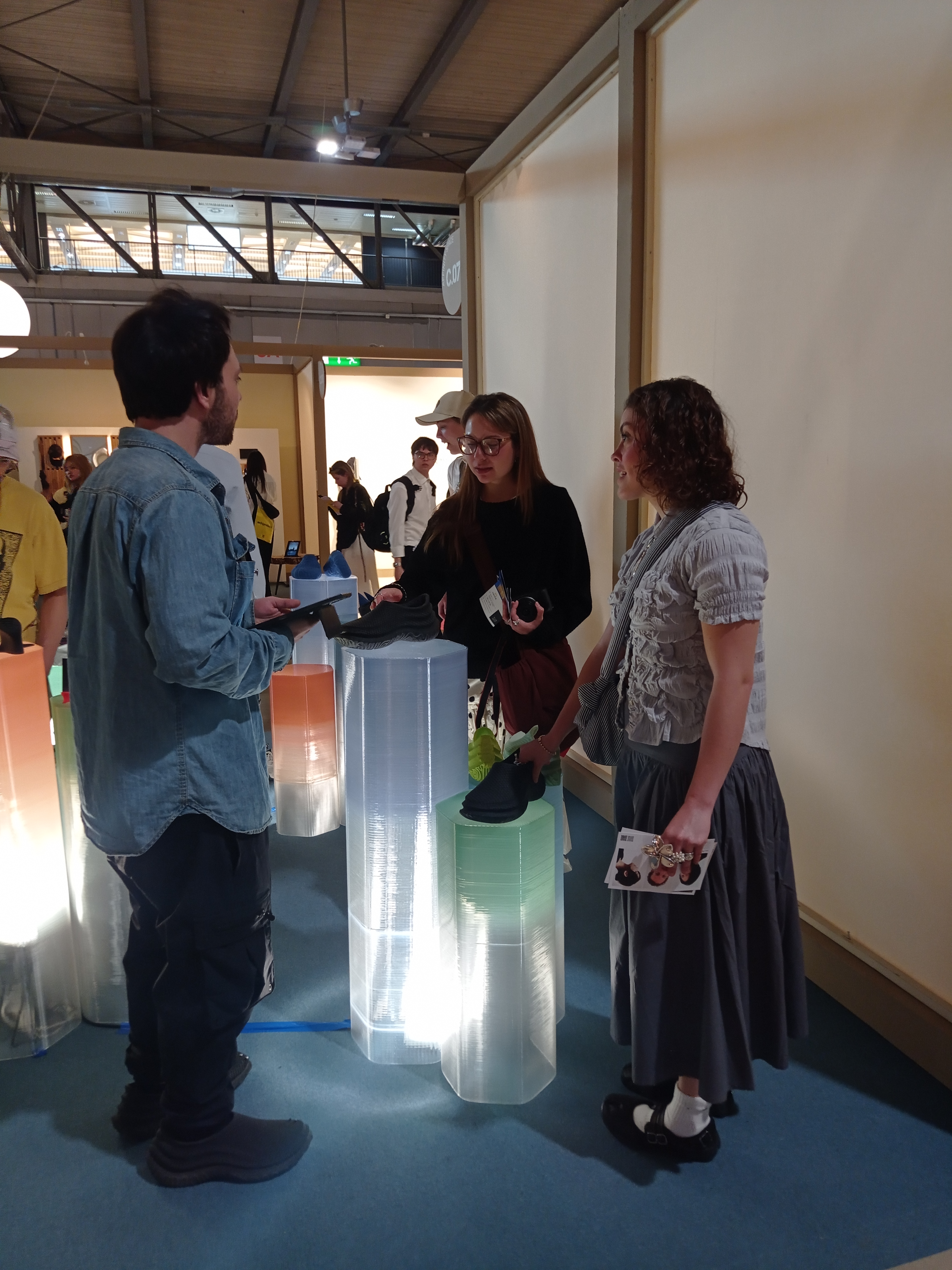
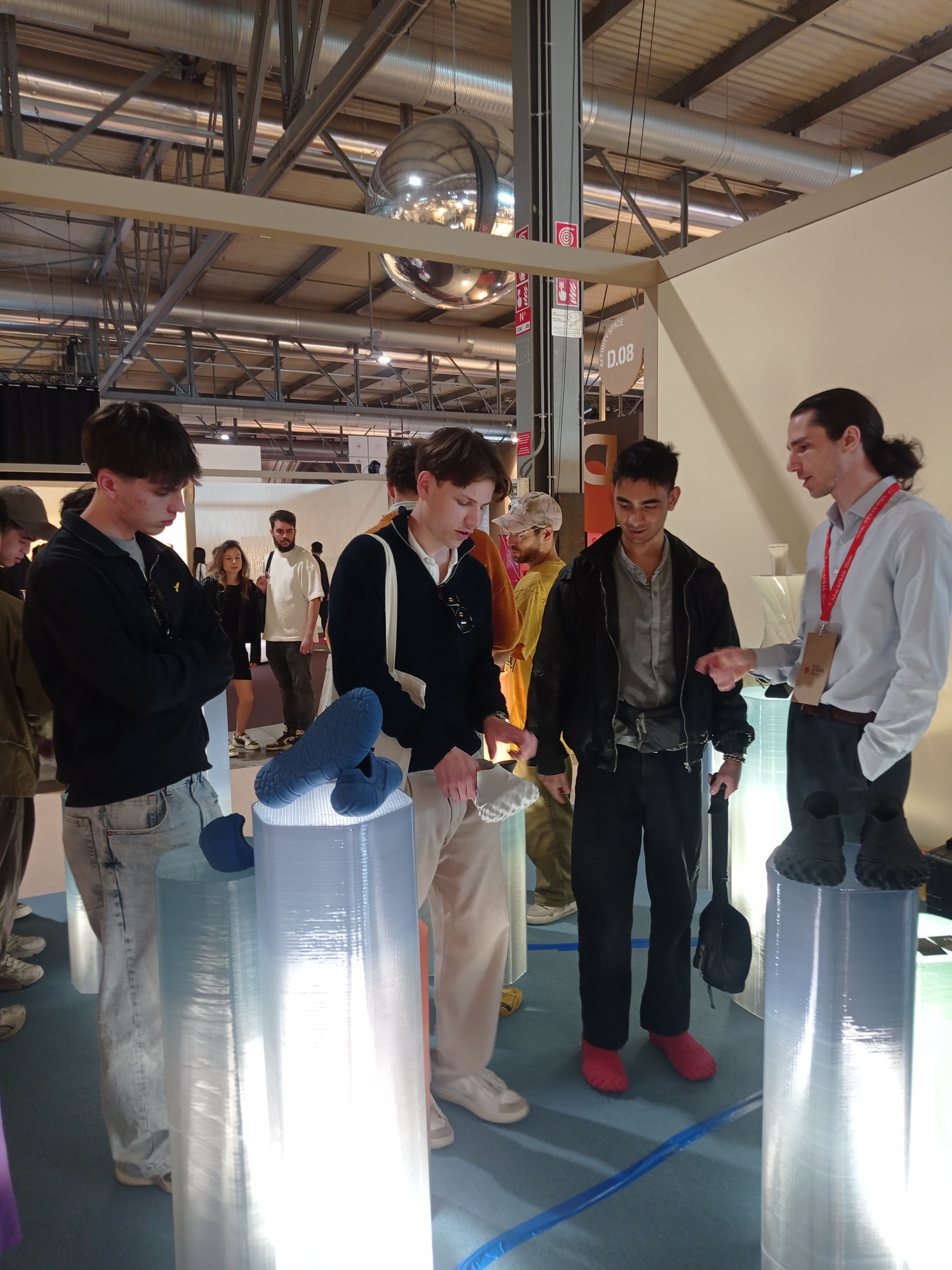
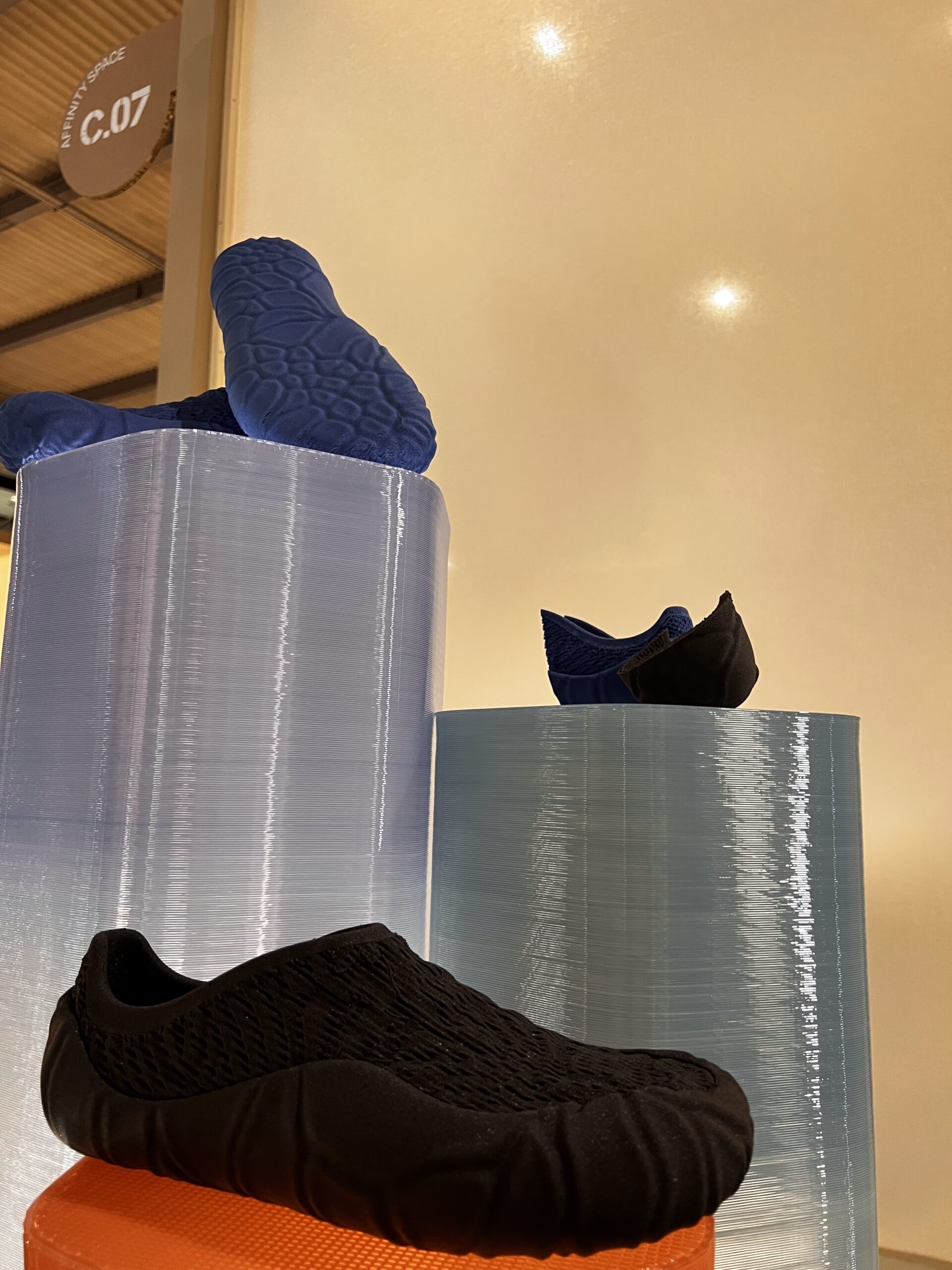
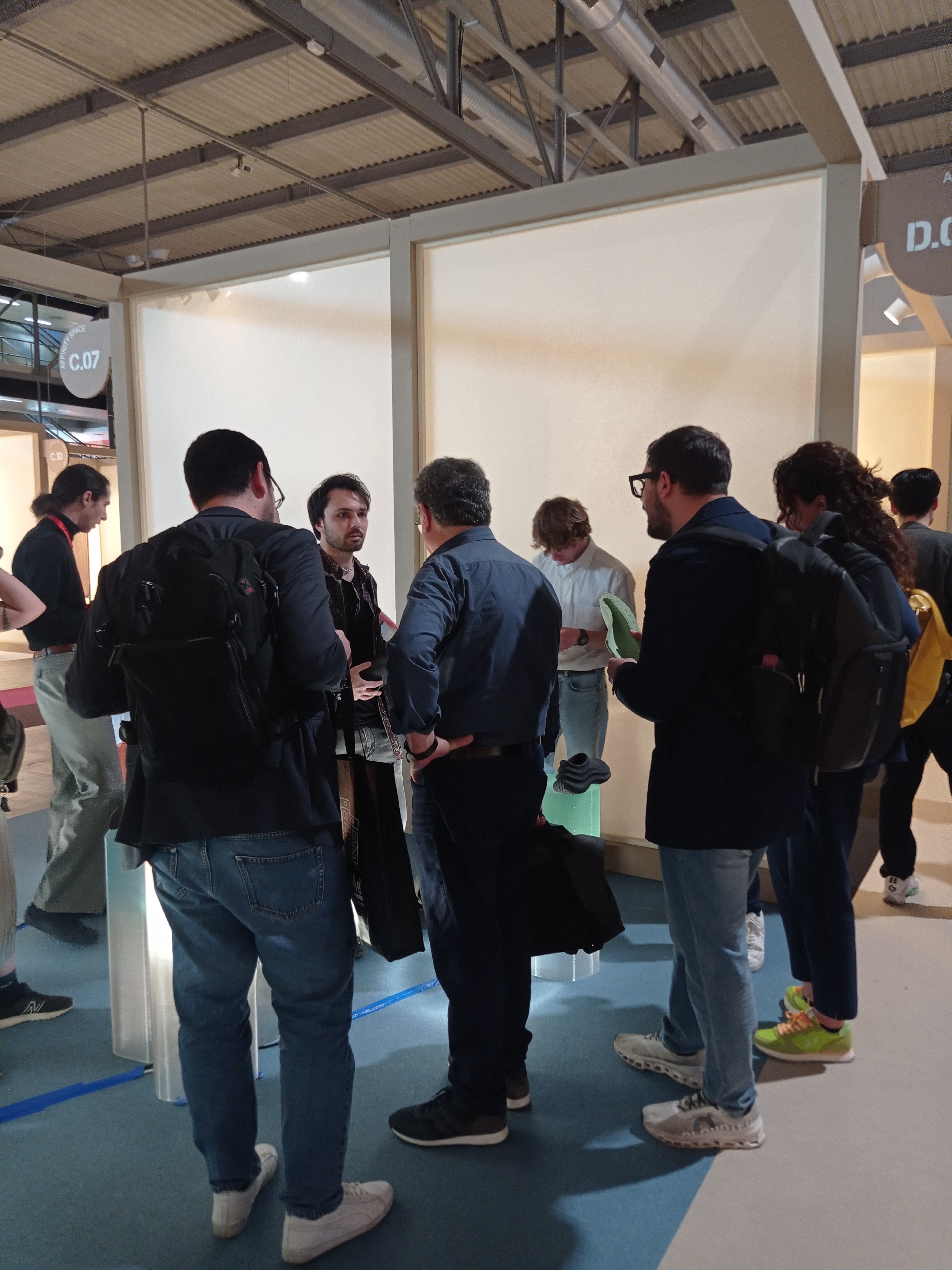
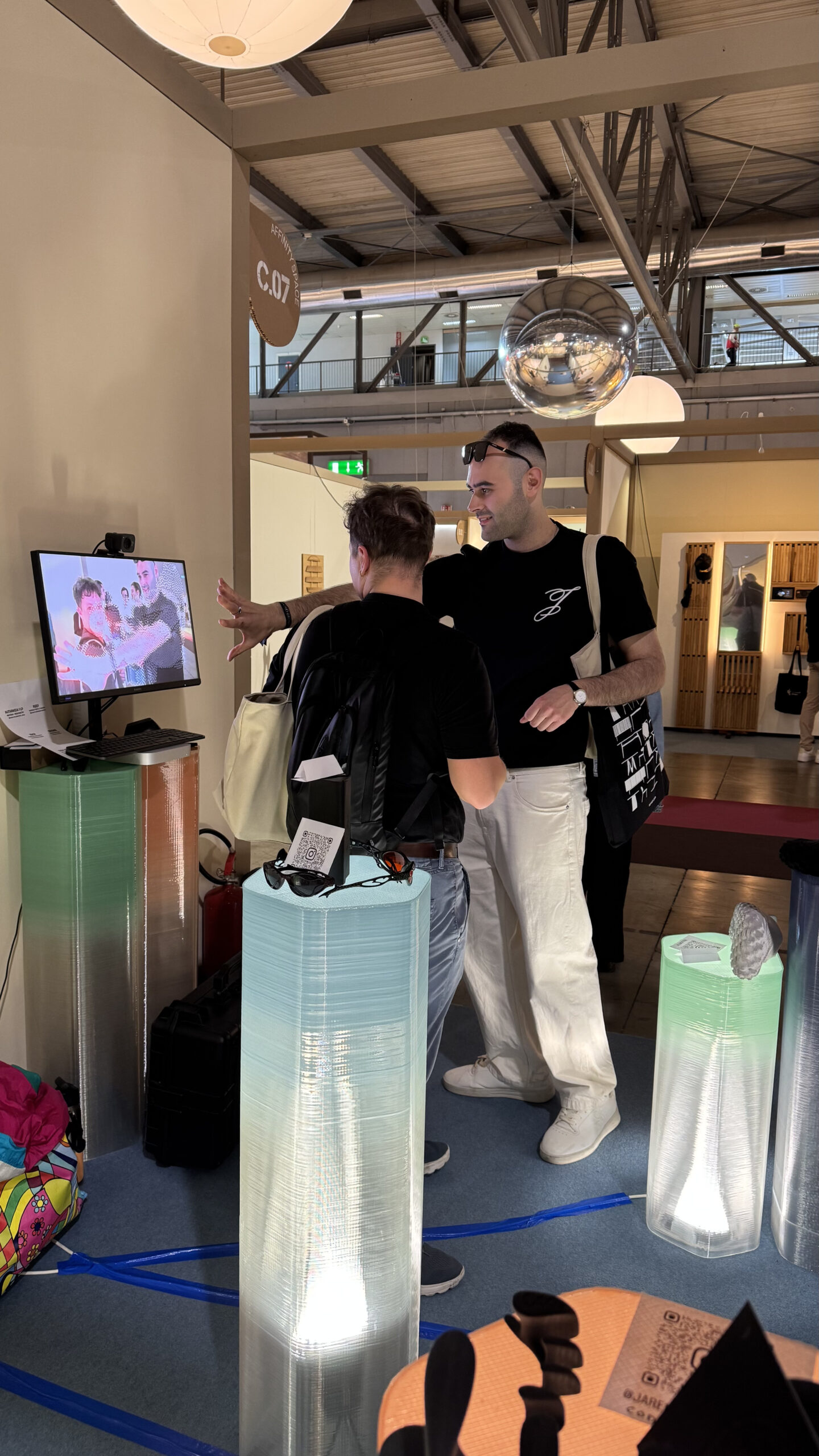
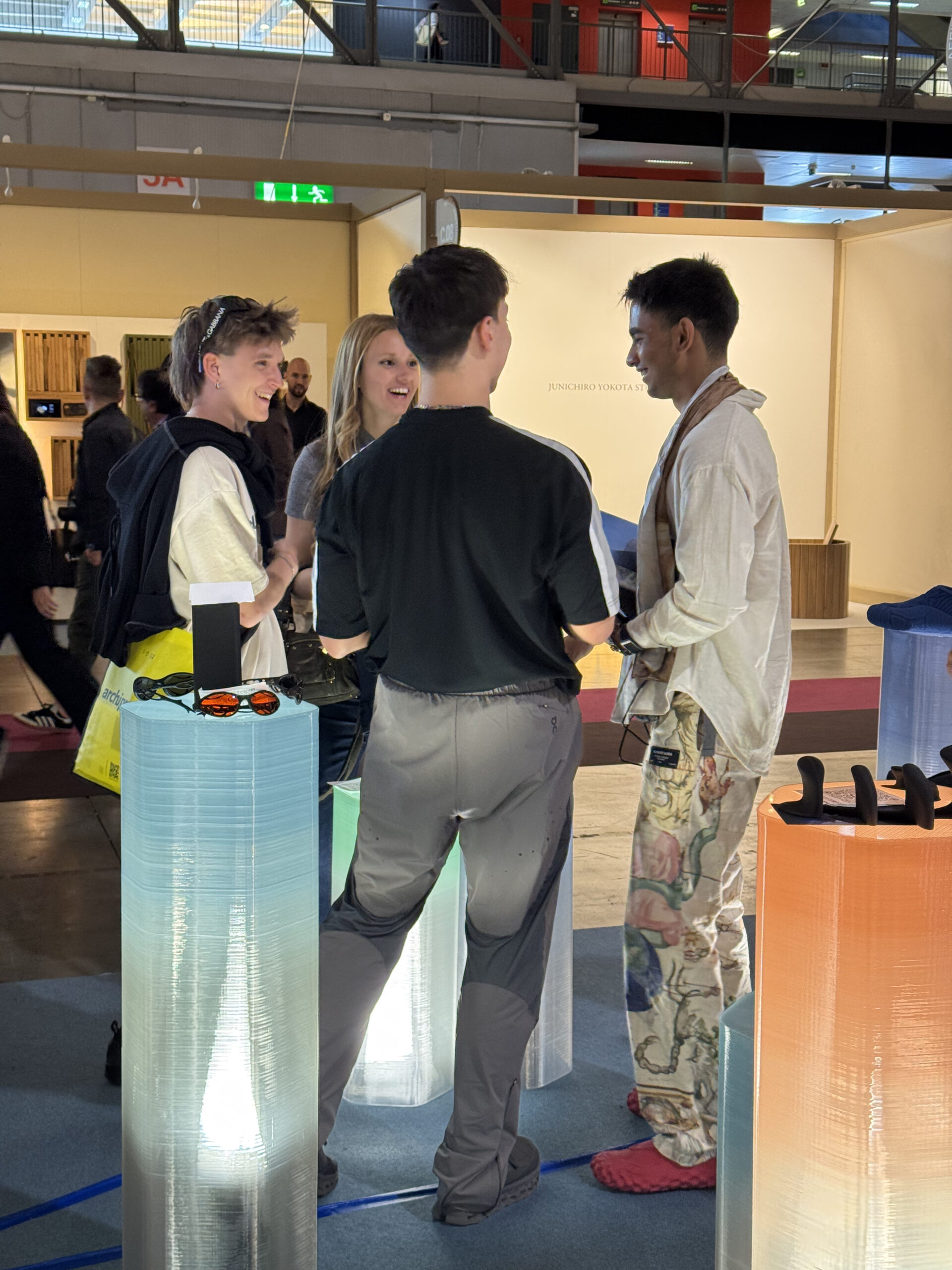
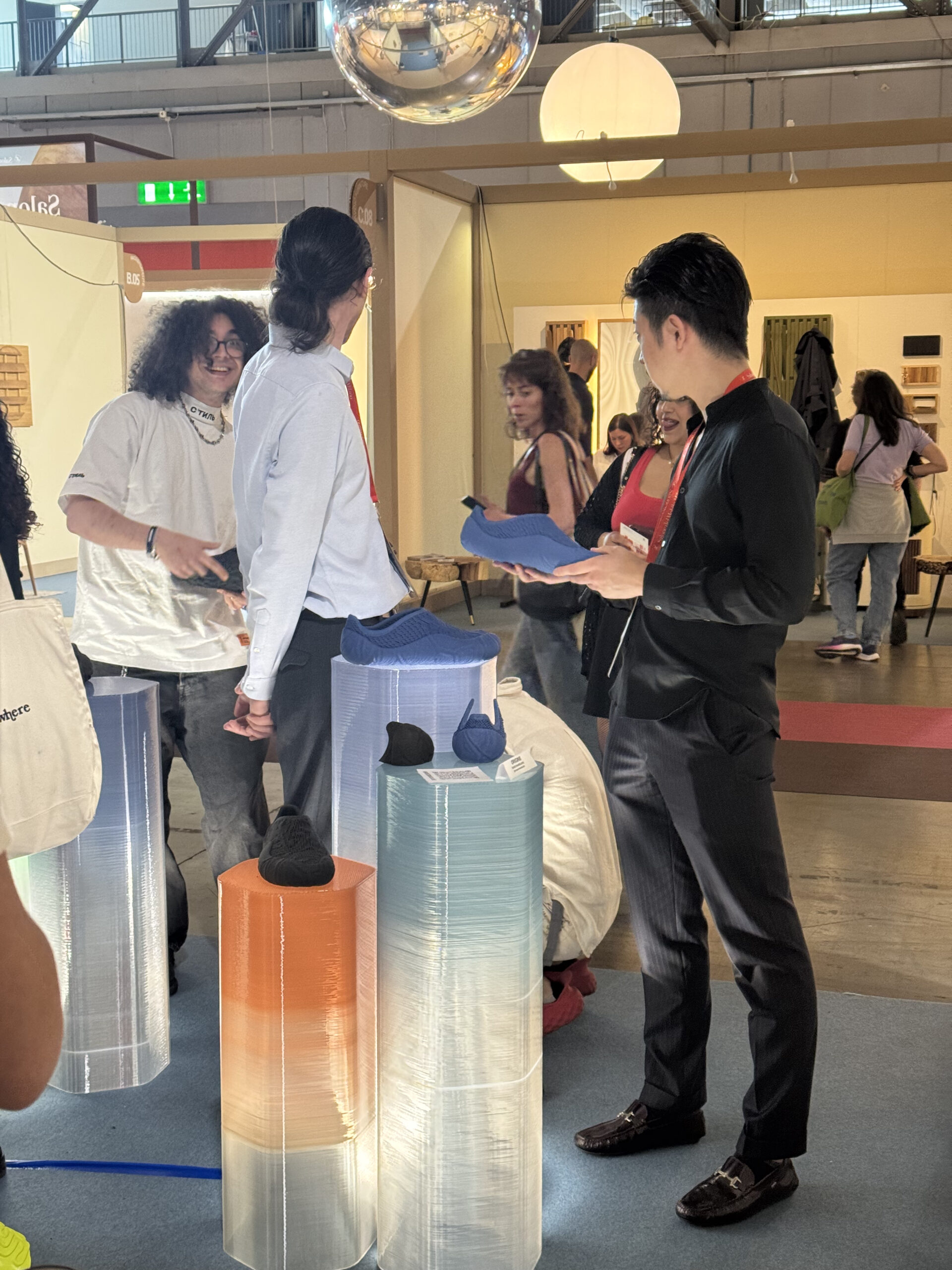
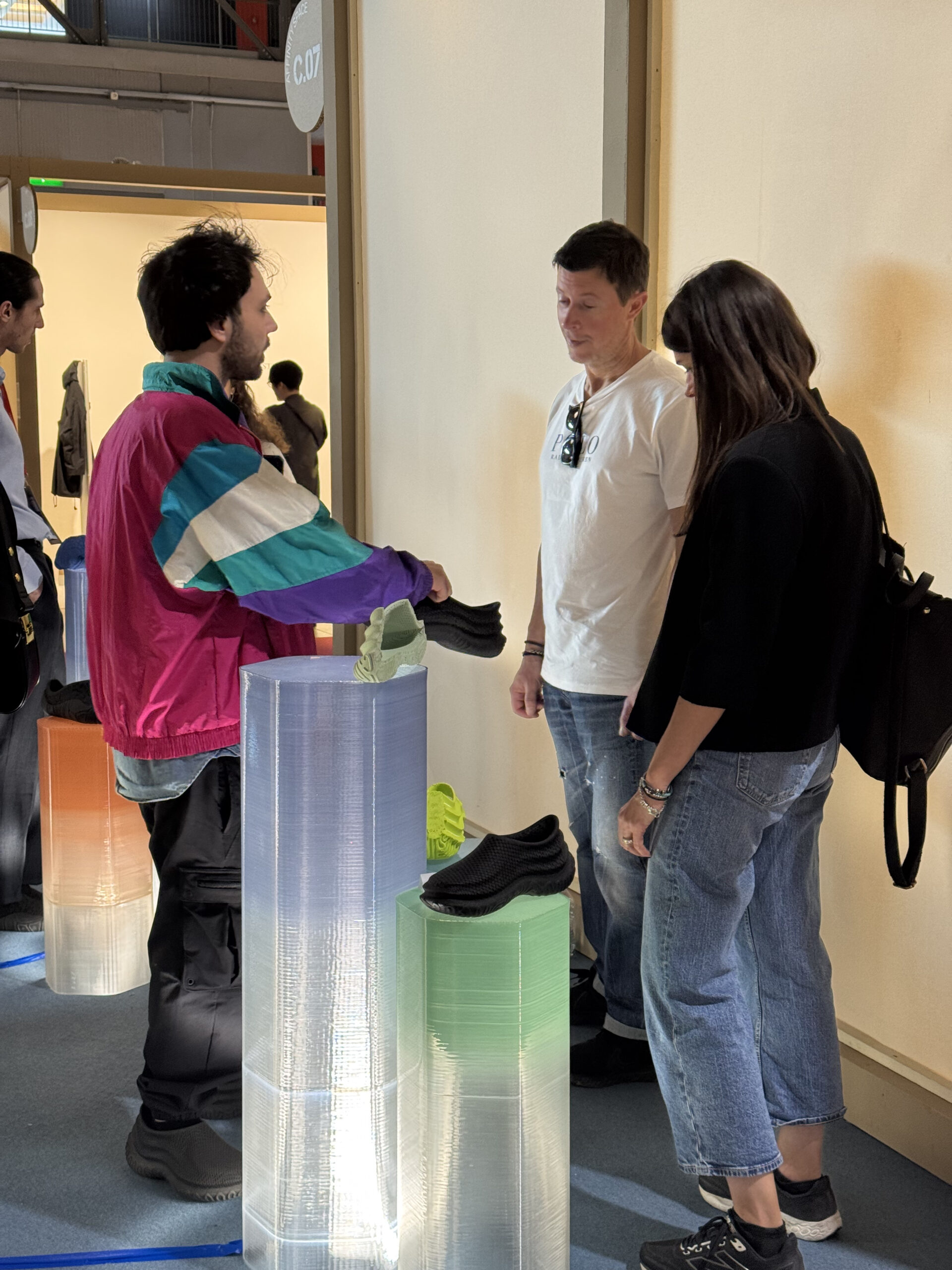
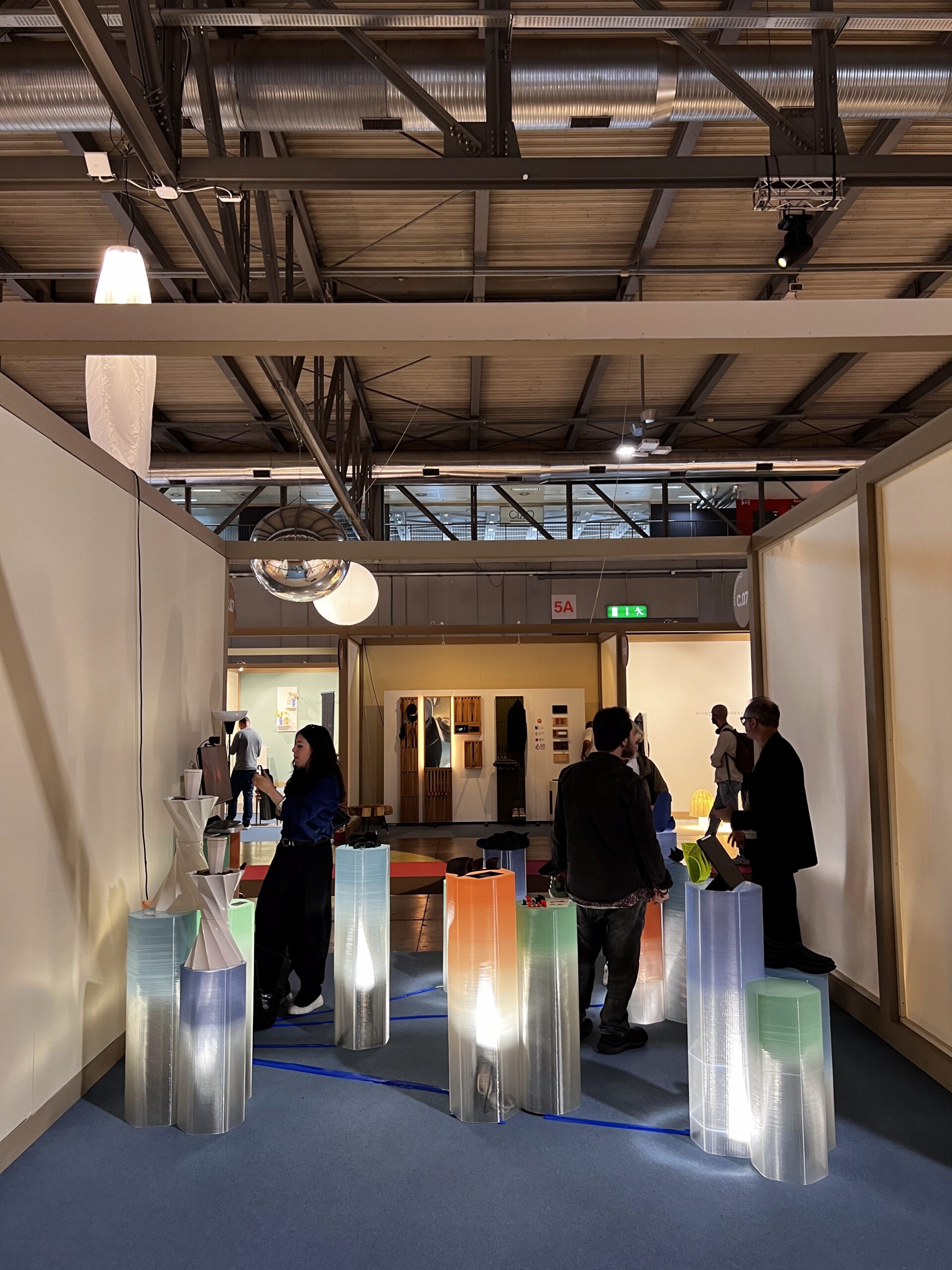
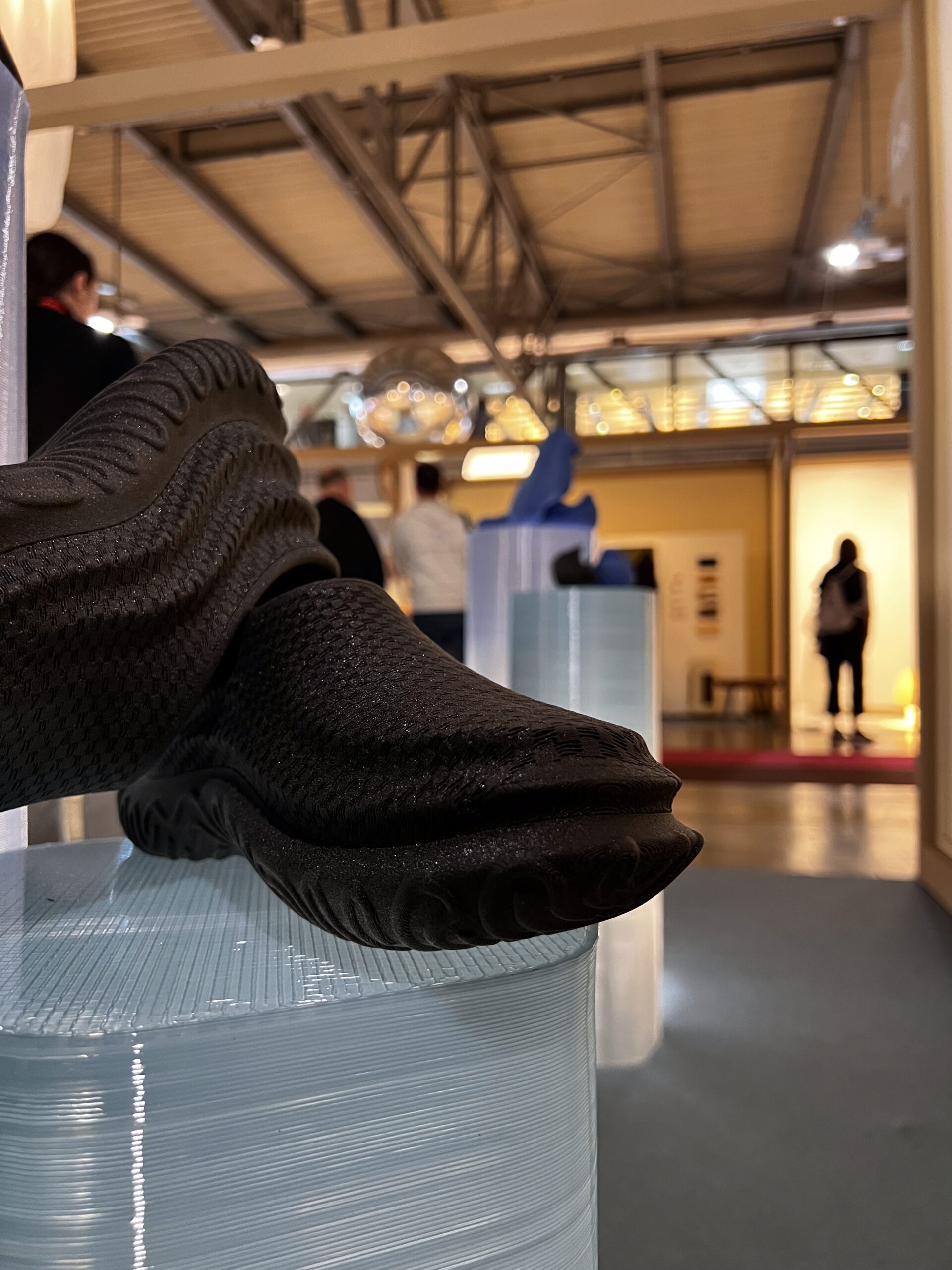
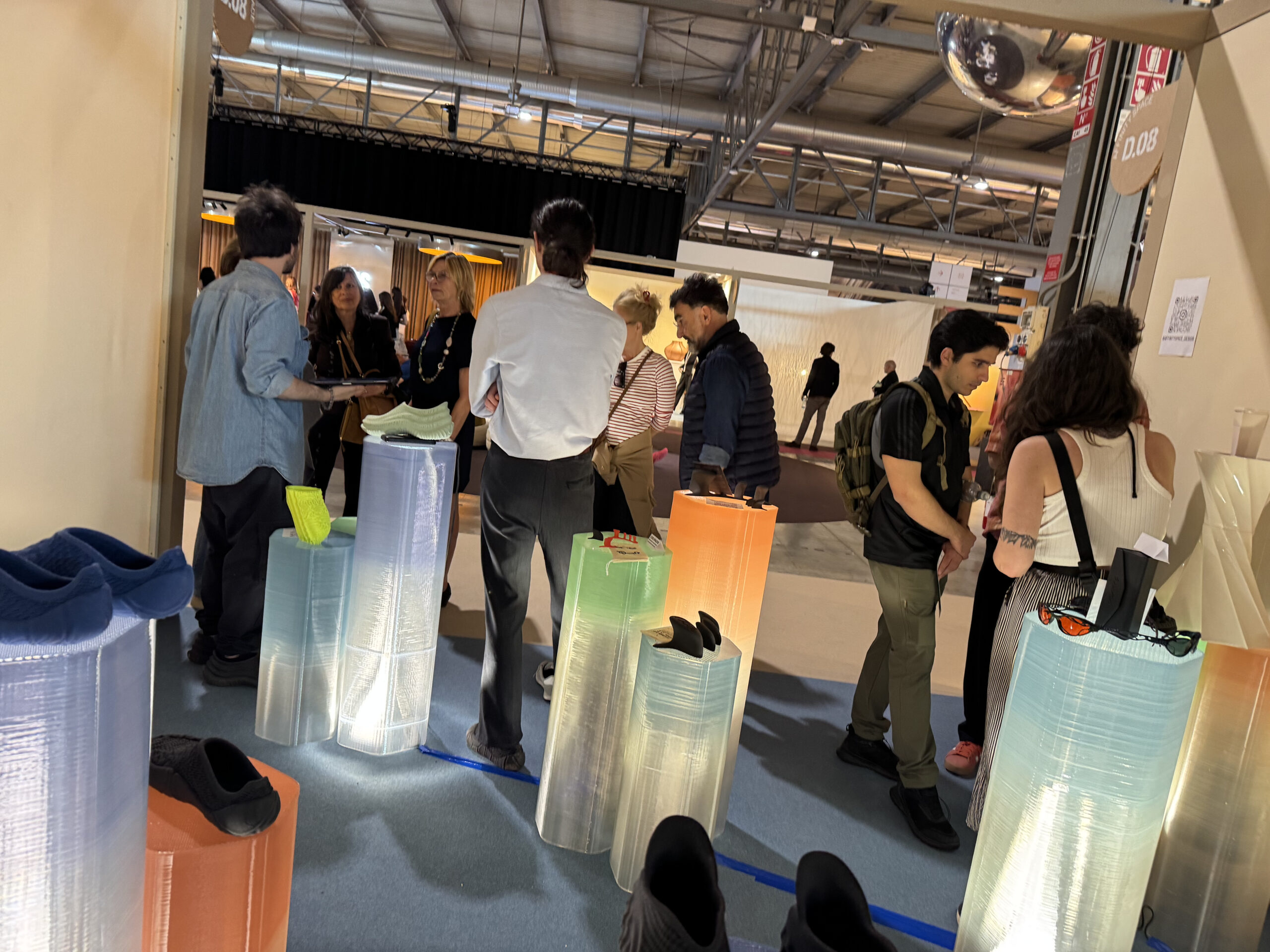
Affinity Space presents seven works at Salone Satellite 2026. The designers in the group come from different disciplines and work in different materials. What links them is a working method: most of the objects on show were generated computationally before they were manufactured, and several of them couldn’t have been made any other way. The work spans ceramic vessels, 3D-printed footwear, and algorithmically generated eyewear. The booth includes live interactive visualisations that respond to visitors in real time, including hand-tracked reaction-diffusion patterns running alongside the REEF sunglasses, and a touch-controlled clay simulation built to demonstrate the principle behind the Code Spacers.
Federico Porta × Visages
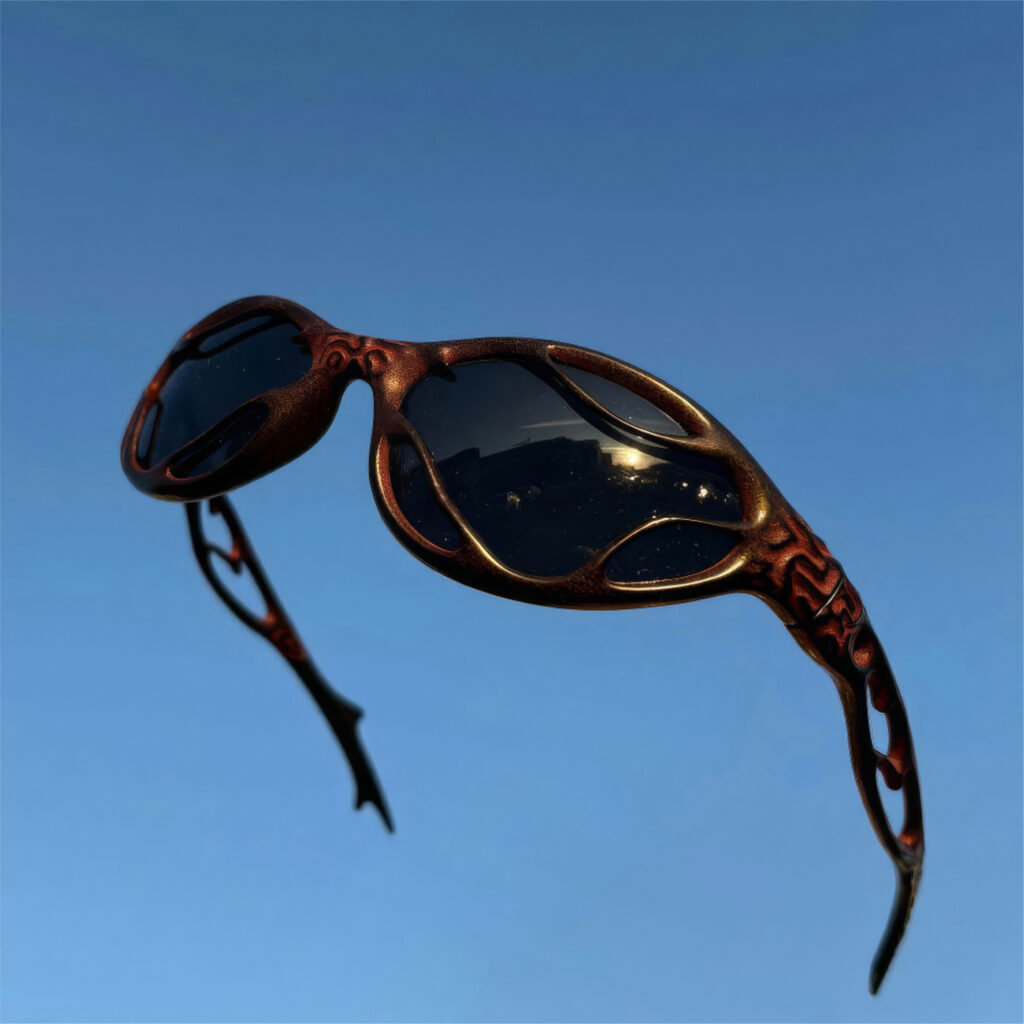
REEF
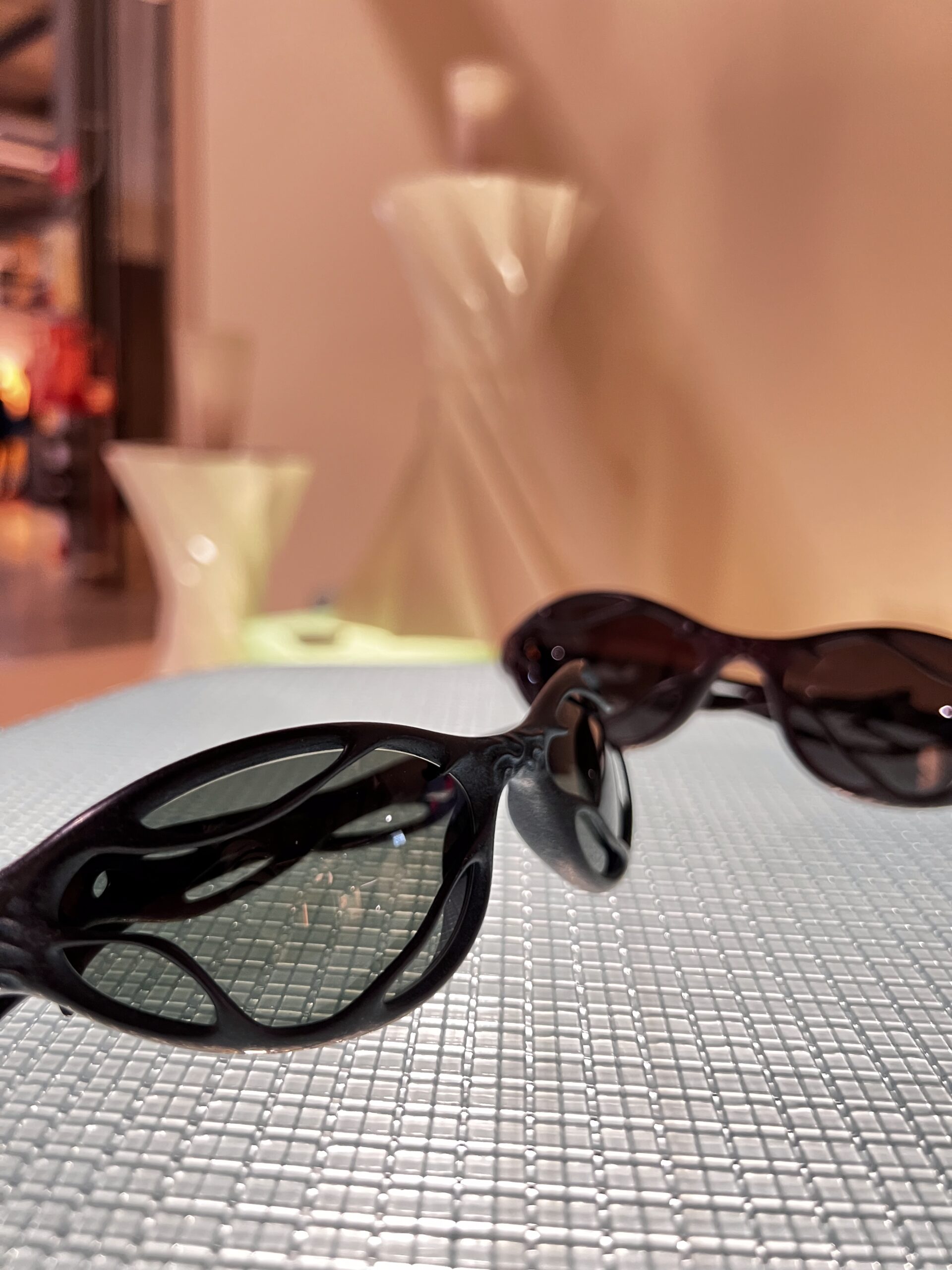
REEF began as a competition entry. In early 2024, JP (Milan-based 3D fashion designer Federico Porta, born 2000, who has previously worked with Prada, On, and Zellerfeld) submitted to a contest run by Oditi in collaboration with Visages. He came second, and Visages got in touch directly to develop the project further.
Two years of iteration followed, with a commercial launch in April 2026. The frame is built around the logic of coral: branching geometry, uneven thicknesses, asymmetric growth. Porta began the design process in virtual reality, sculpting the form spatially in Gravity Sketch rather than working from flat sketches. The model was then refined in Blender over two years, with the surface texture developed through algorithmic displacement that simulates reaction-diffusion.
This is the same biological mechanism that produces leopard spots, zebra stripes, and the skin of coral itself. Every point on the frame carries a slightly different depth and relief, so the surface reads as something grown rather than printed. The frame is produced in SLS powder-based nylon and finished with a patina applied after printing, which gives a chromatic depth that direct printing alone cannot achieve.
Future colourways in translucent resin are planned, and will reveal the internal structure of the frame. Visages manufactures each pair to the customer’s face measurements, taken via a phone scan during checkout. Priced at €200, available at visages.com.
Manufacturing process: Powder-printed Nylon PA 12
Fabrizio De Lucia × Nicer
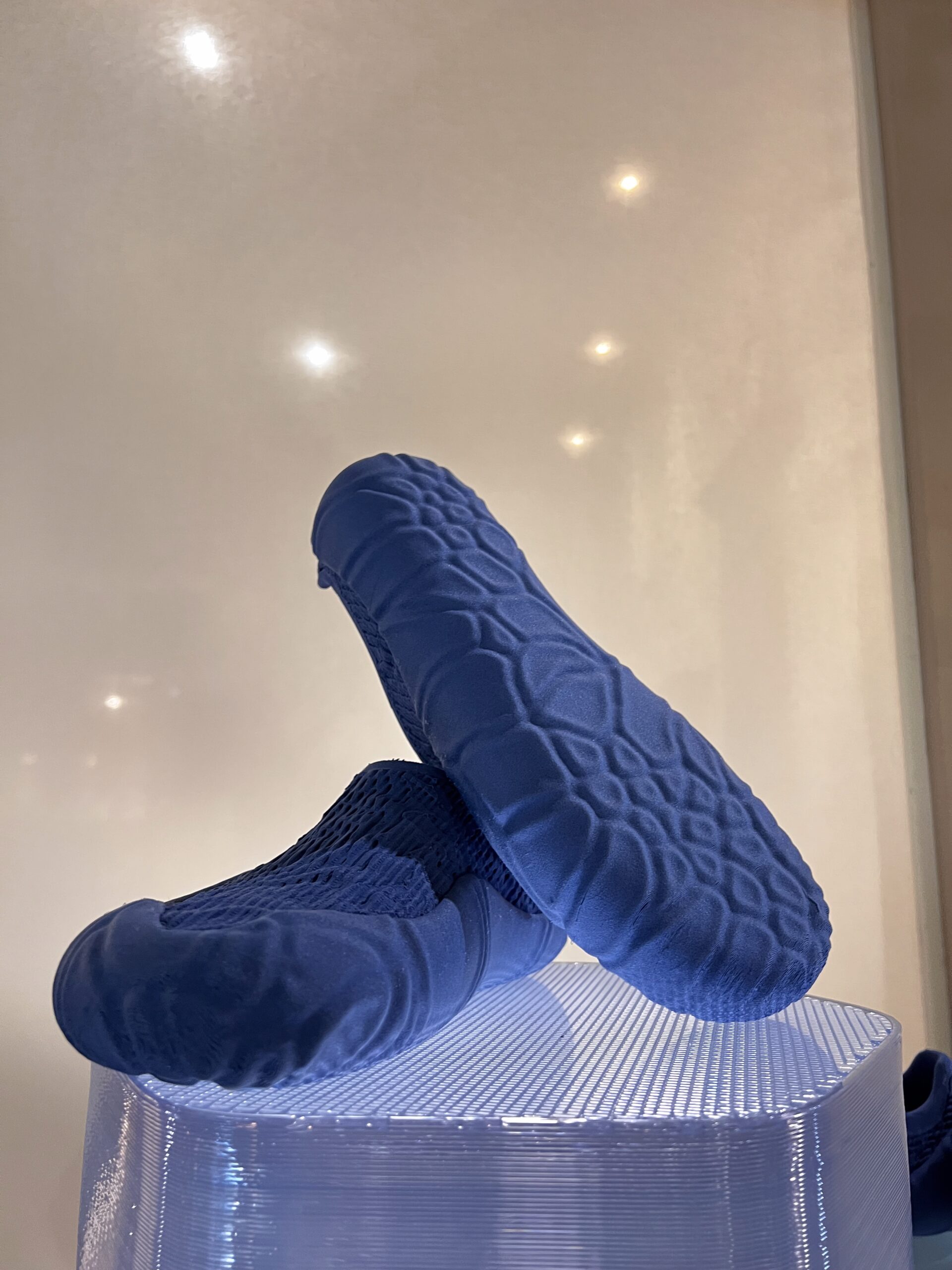
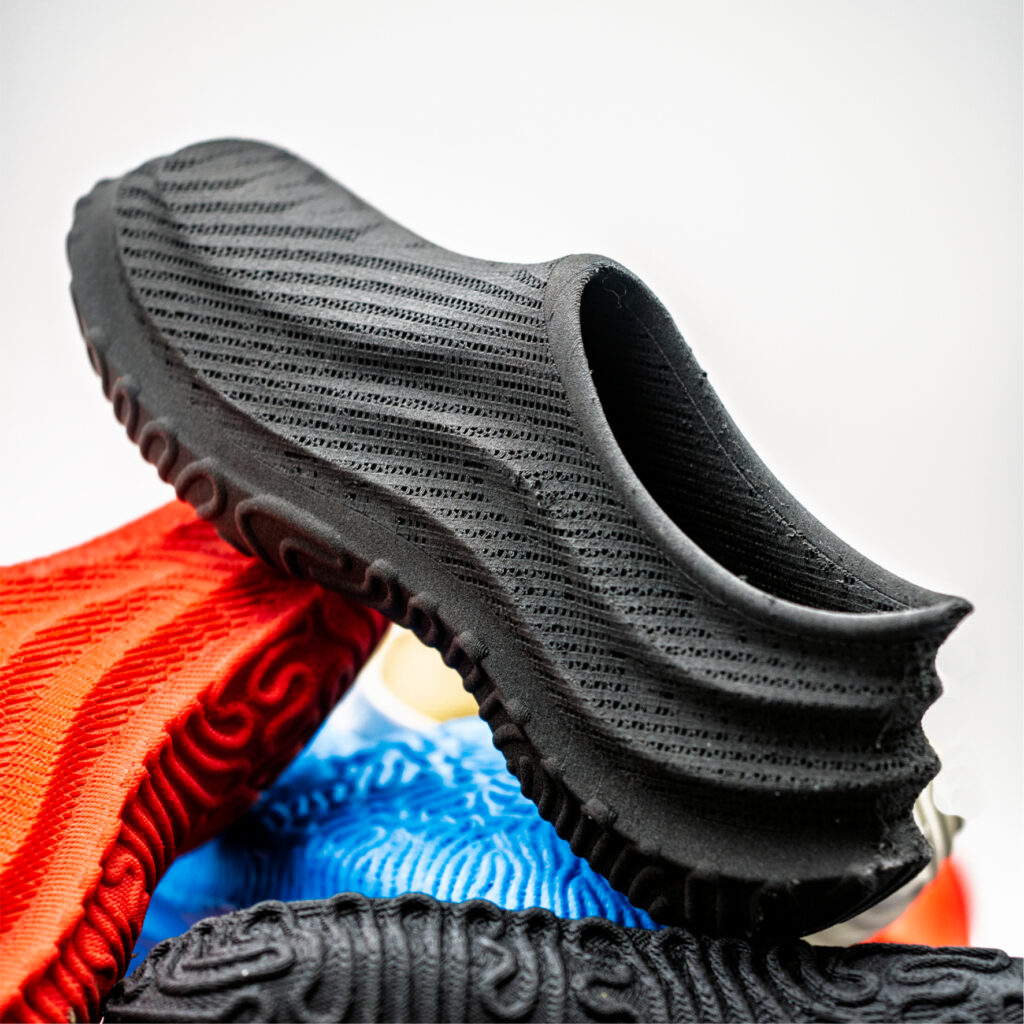
16kw
The name comes from an energy bill: 16kw is the kilowatthours it took to print the first prototype. Production has become significantly more efficient since then, but the name has been kept. Partly as a record of where the project started, partly as an honest acknowledgment that making things requires energy.
There’s a second reading. 16kw is also the kind of energy a six-hour set demands, the output of a working sound system, the cost of a long night on a hard floor. The shoe was designed with both meanings in mind. 16kw is Nicer’s first consumer product. The company has until now been a B2B operation, building digital tools for the footwear industry; this marks its public move into making shoes, not just tools for making them. Fabrizio De Lucia, co-founder of Nicer, designed every element of the OG edition himself in close connection with Koobz, across more than fifty iterations.
The supply chain story makes the headline. The shoe is printed from a single recyclable polymer, with no moulds, no cutting tables, no stitching, and no assembly. Each pair is made to order, printed by Koobz after the customer buys it, and the material can be recovered at the end of its life. There is no overproduction and no warehouse stock.
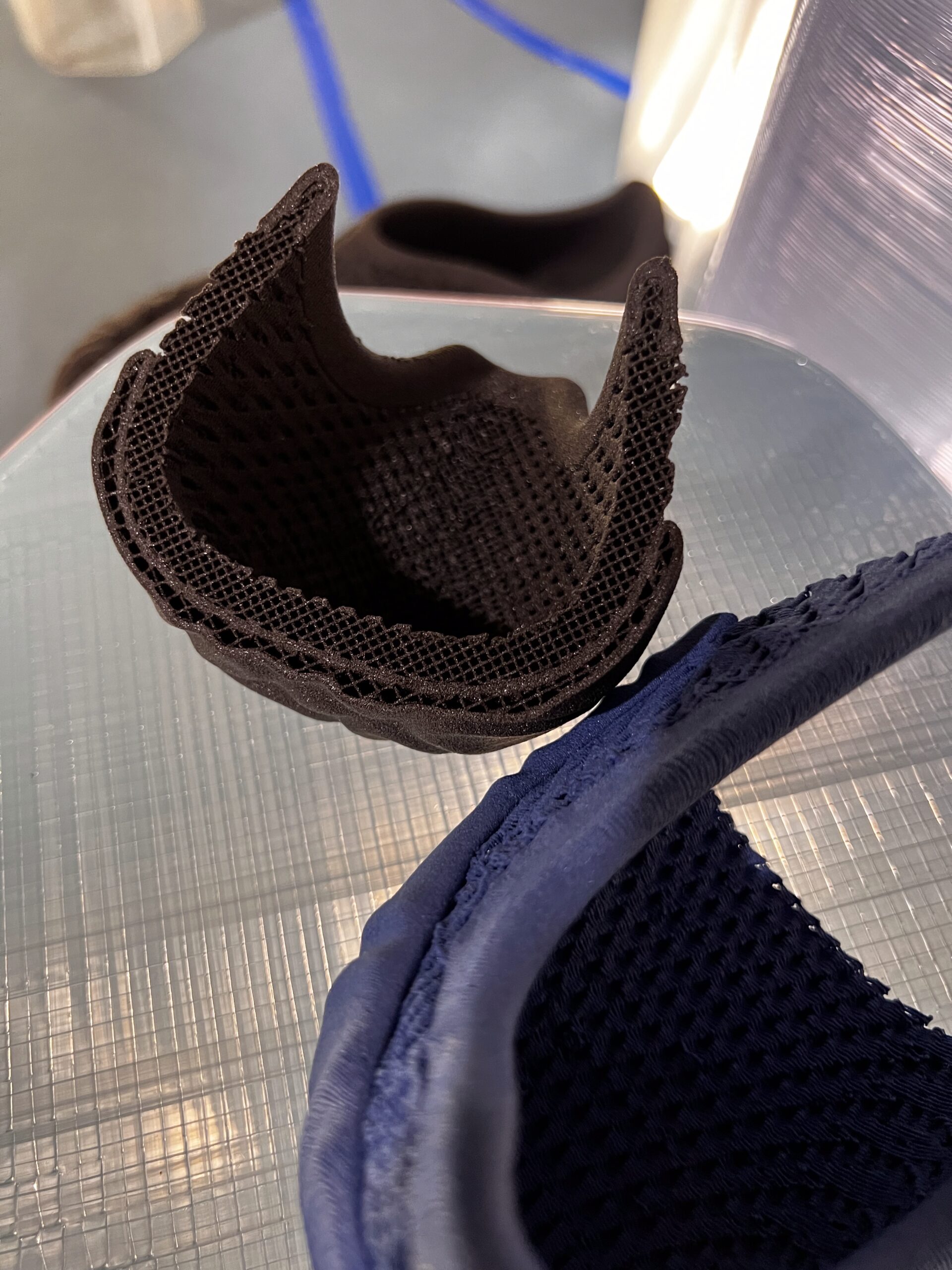
The sole geometry is generated by a differential growth algorithm, the same computational process that produces coral structures in nature. Density is uniform across the entire surface, which gives grip that holds equally well in any direction of movement: pivoting, dancing, prolonged standing. The sole is engineered for hours on hard surfaces. It includes a 10mm perimeter bumper for protection, a mesh vamp for ventilation, a 30mm heel stabiliser, an 8mm drop with 30mm of heel cushioning, a wide toebox and a collar that opens outward rather than gripping the ankle.
The OG 16kw launches at €150, in a run capped at 1,000 pairs available on nicer.company. Subsequent editions will be developed with electronic music artists, both Italian and international, working as full creative collaborators rather than as colourway brands.
Manufacturing process: FDM-printed foamy TPU
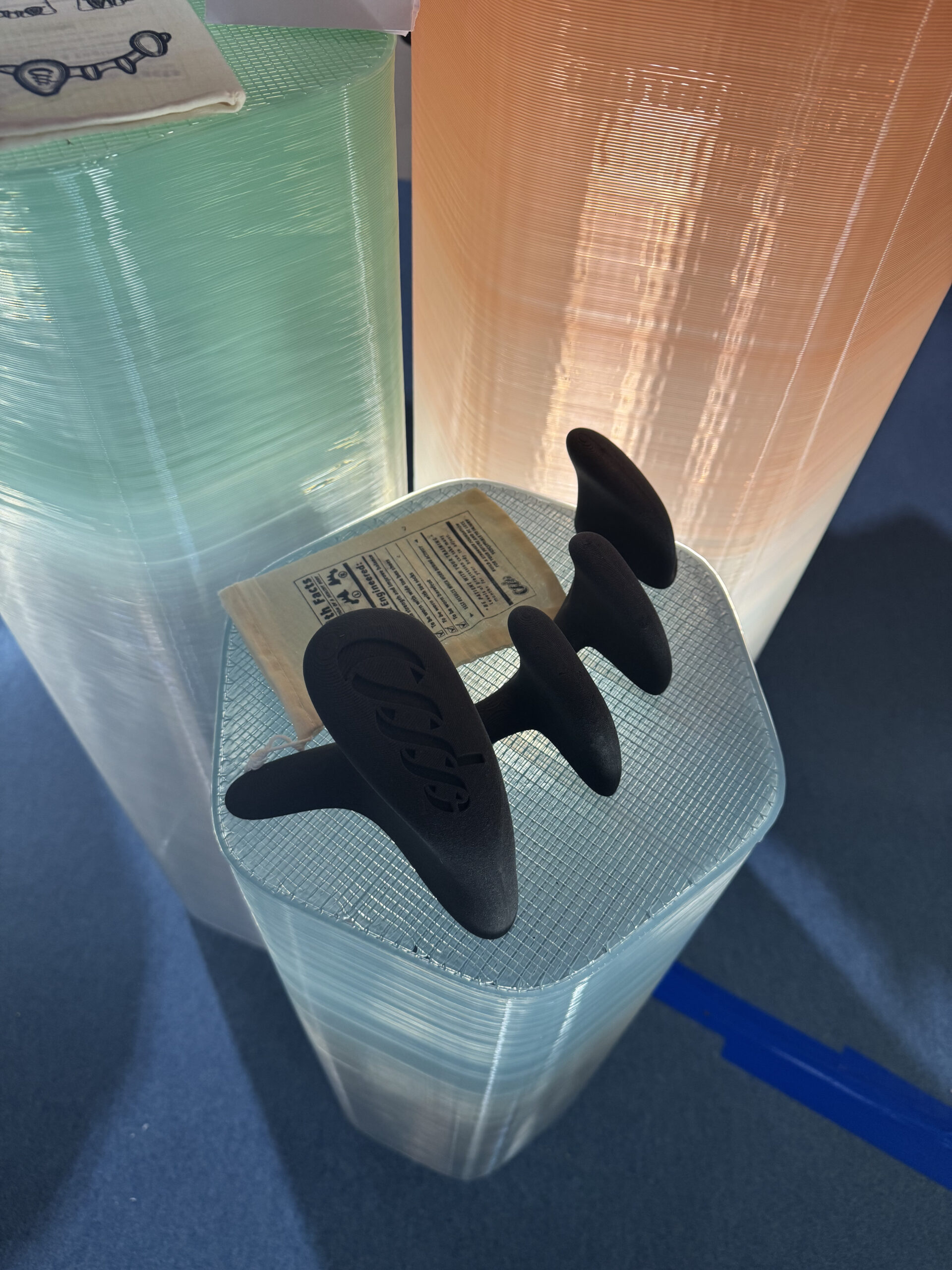
Jared Fiorovich × Code Footwear
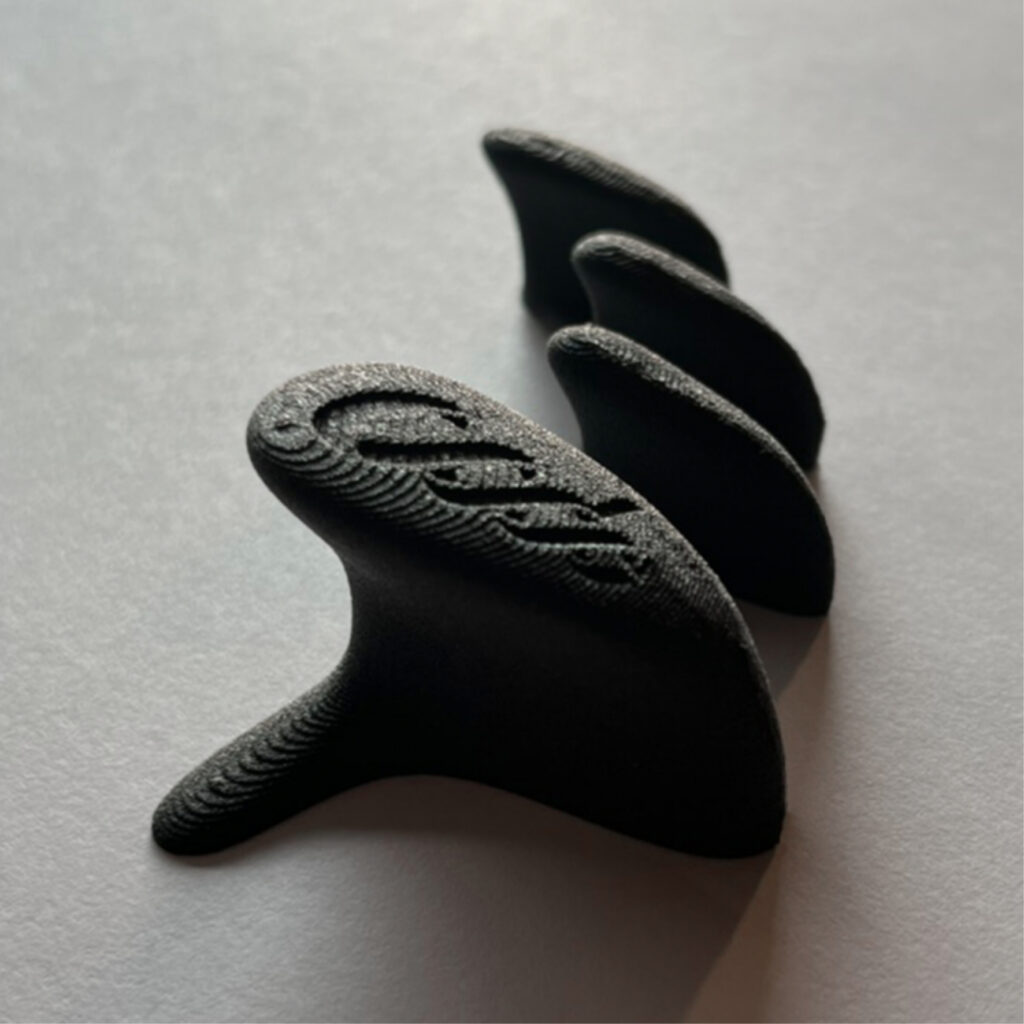
Code Spacers
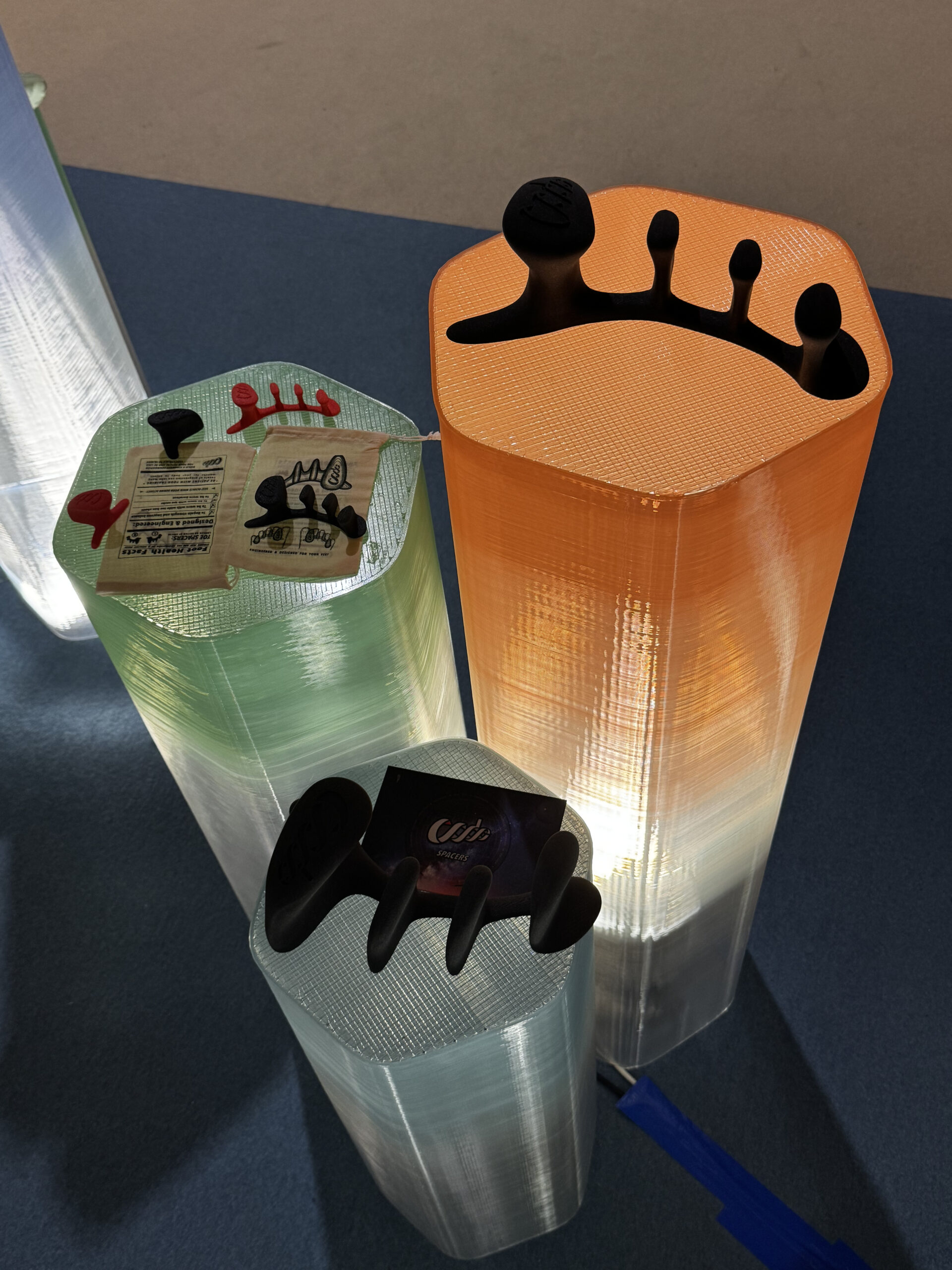
Modern footwear compresses the toes. The narrow-toe silhouette has been an industry default for decades, and the foot adapts to it badly: collapsed arches, reduced balance, load that ends up redistributed into the ankle, knee, and hip. Code Spacers were developed to address this directly.
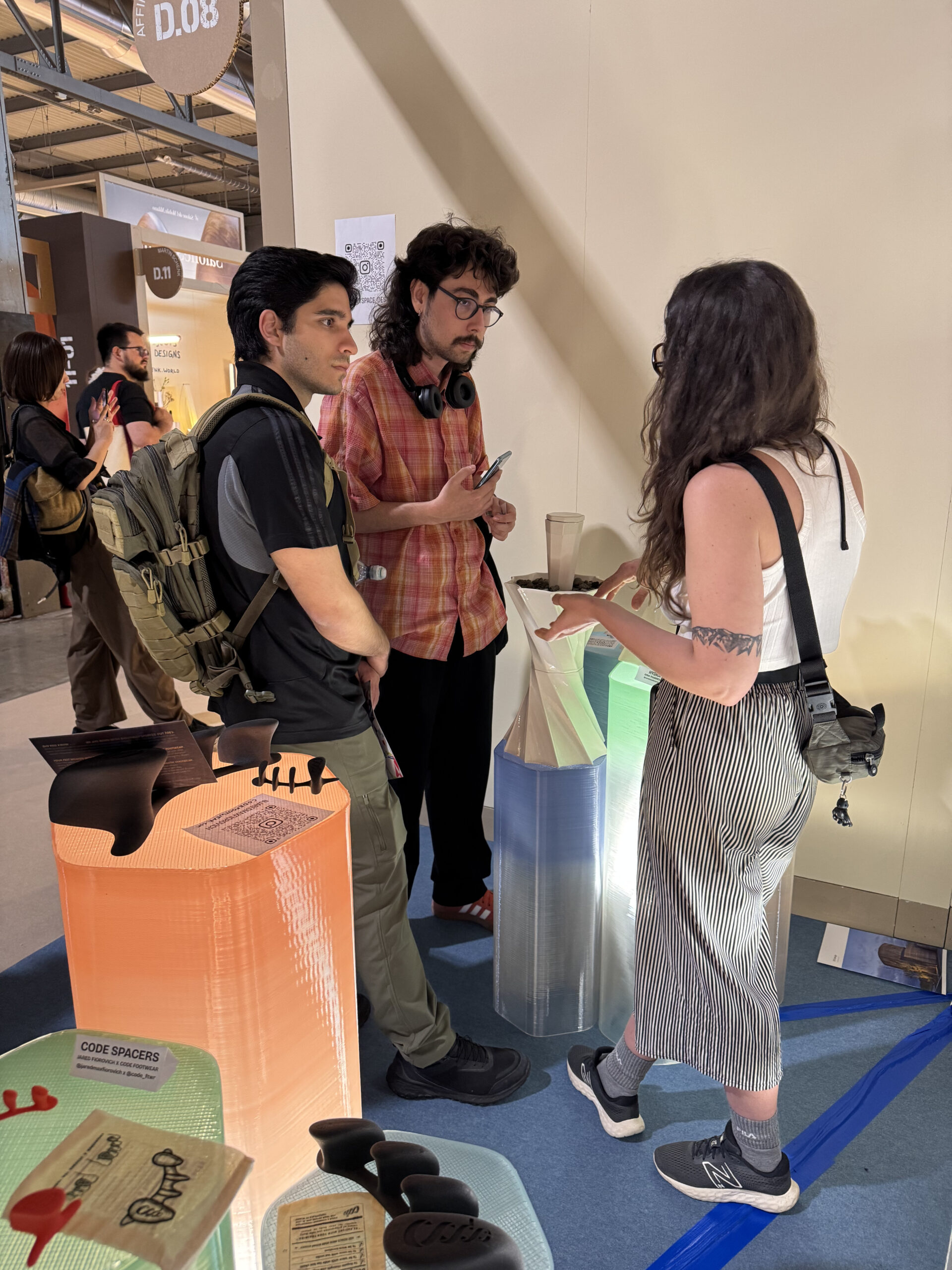
The spacers restore natural toe splay, the position the foot has at birth, before footwear begins narrowing it. They are sculpted to fit inside wide toebox athletic shoes without raising the toe box height, and they are light enough to disappear once worn: 3.5 grams for a single big-toe spacer, 7 grams for a full set.
They can be used with socks, toe socks, or barefoot. The product was developed in collaboration with NFL athletes and is built for high- performance contexts rather than recovery rooms. Engineered, designed, and produced in the United States.
The premise is straightforward: the standard shape of an athletic shoe has been quietly distorting the human foot for years, and the spacers exist to begin reversing it.
Manufacturing process: FDM-printed foamy TPU
Kedar Benjamin × Materia
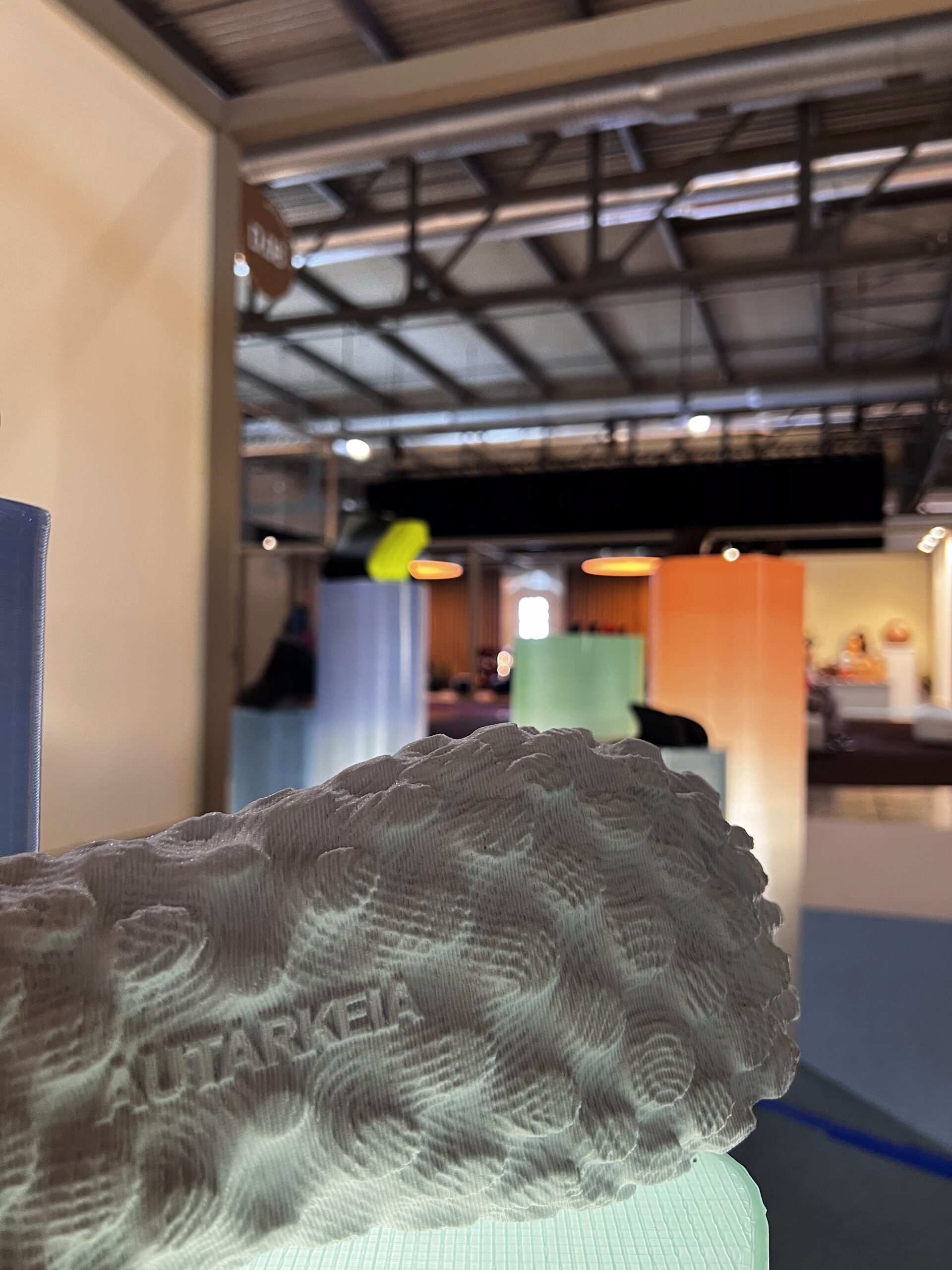
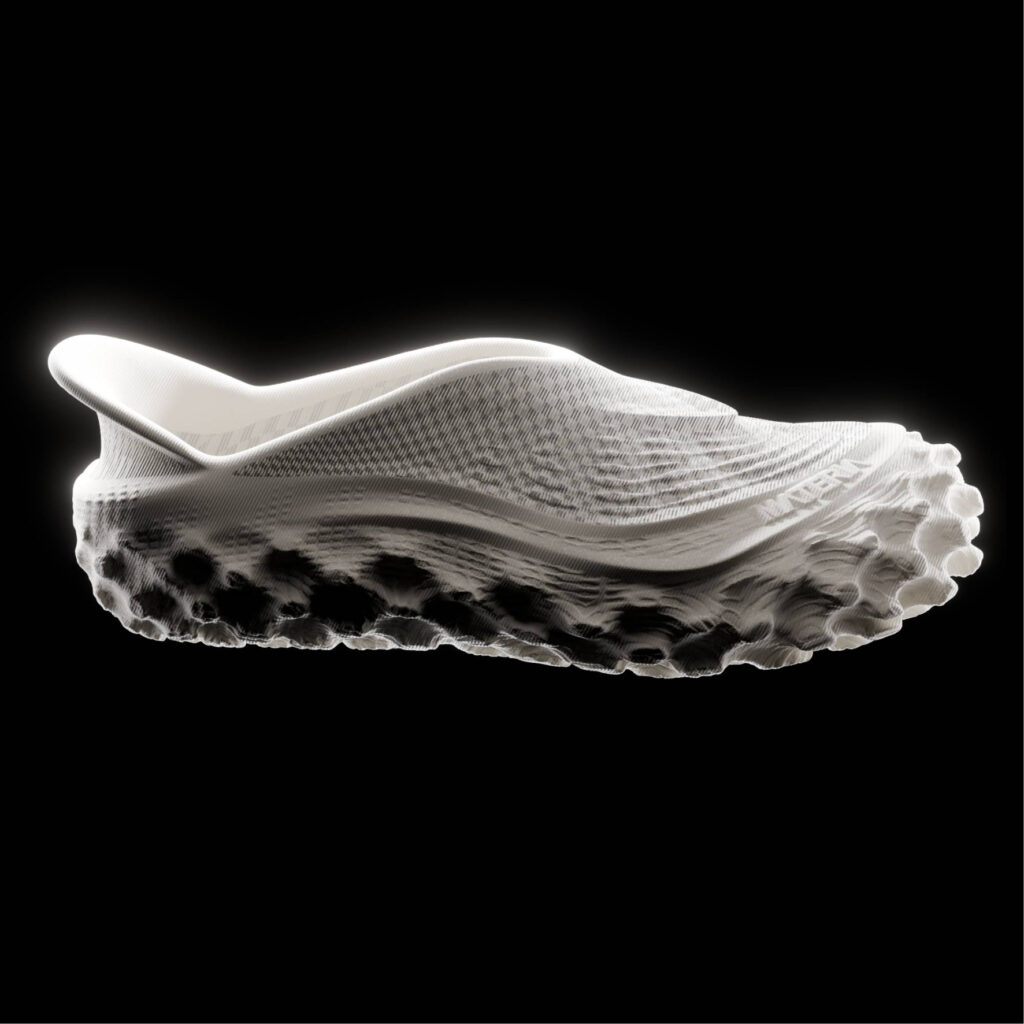
AUTARKEIA 1LP
The name is taken from the Greek αὐτάρκεια, meaning self-sufficiency. The shoe was designed around the idea. AUTARKEIA 1LP is a barefoot urban trail shoe built for handsfree use.
The heel is low- profile and compressible, so it functions as a built-in shoehorn: the shoe can be put on and taken off without bending, without help, without a second person. It was designed with differently abled wearers in mind, and for anyone who finds that kind of daily friction worth removing.
A different version of the shoe was worn by the dancers at the Milano Cortina 2026 Paralympic Games Opening Ceremony. The sole pulls from two reference points: gecko skin and Milanese subway textured tiles. Lug geometry borrows from both, and microtextures at the forefoot mimic the surface of gecko toes to improve grip on small irregularities. A functional lip around the upper separates the open mesh from the closed sole, allowing air to move freely through the shoe while keeping puddles splash out.
The design is almost entirely parametric, developed in Houdini after the base silhouette was modelled in Blender. The sole uses a unit cell lattice that morphs between three lug configurations (small and spiky, wide and rugged, slanted and sleek) across different zones of the foot, driven by pressure data and local manufacturing constraints. Custom fit is available through Zellerfeld’s foot scan system, with whom the shoe is produced.
Manufacturing process: FDM-printed foamy TPU
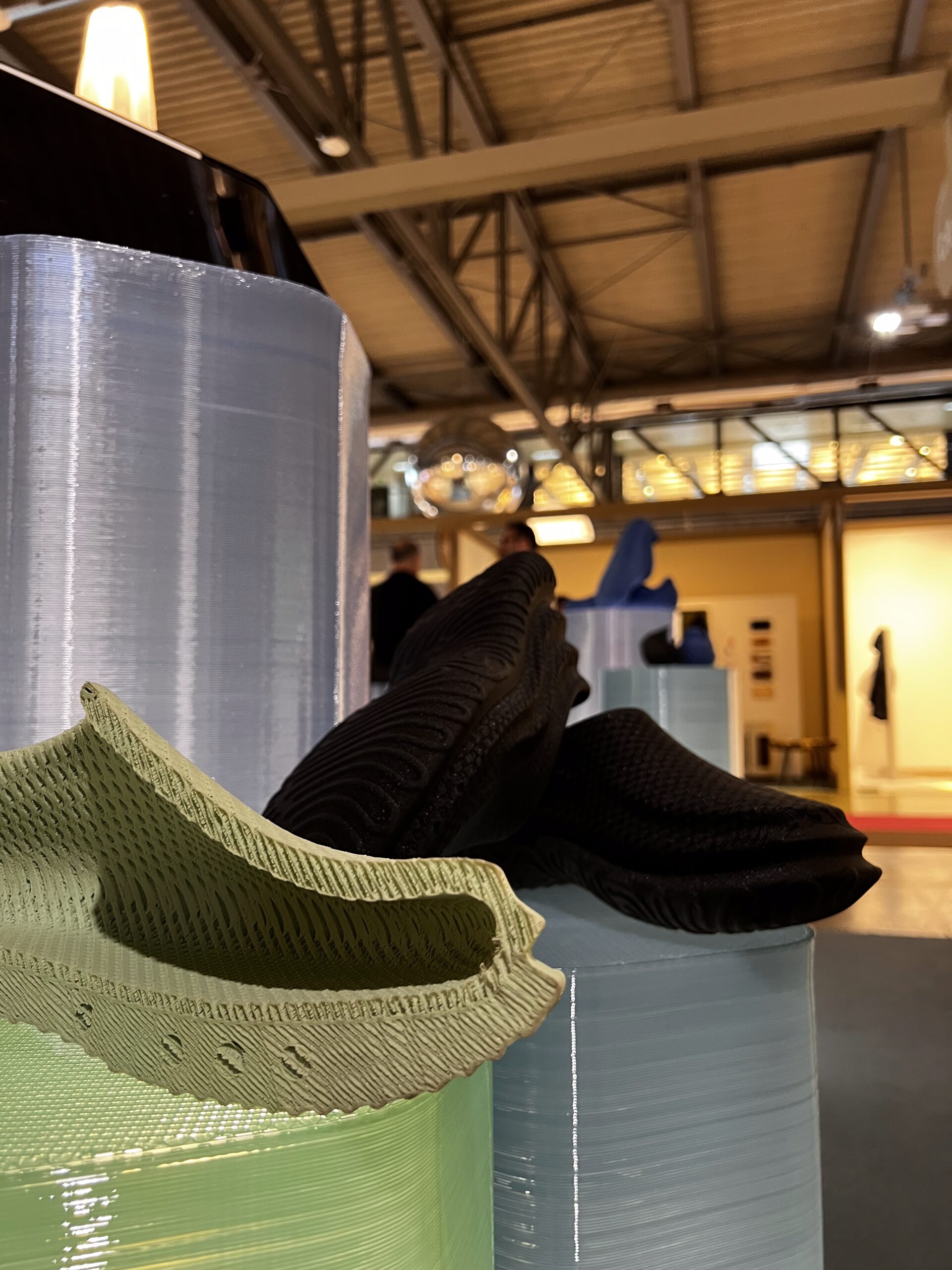
Rares Manolache
Origins
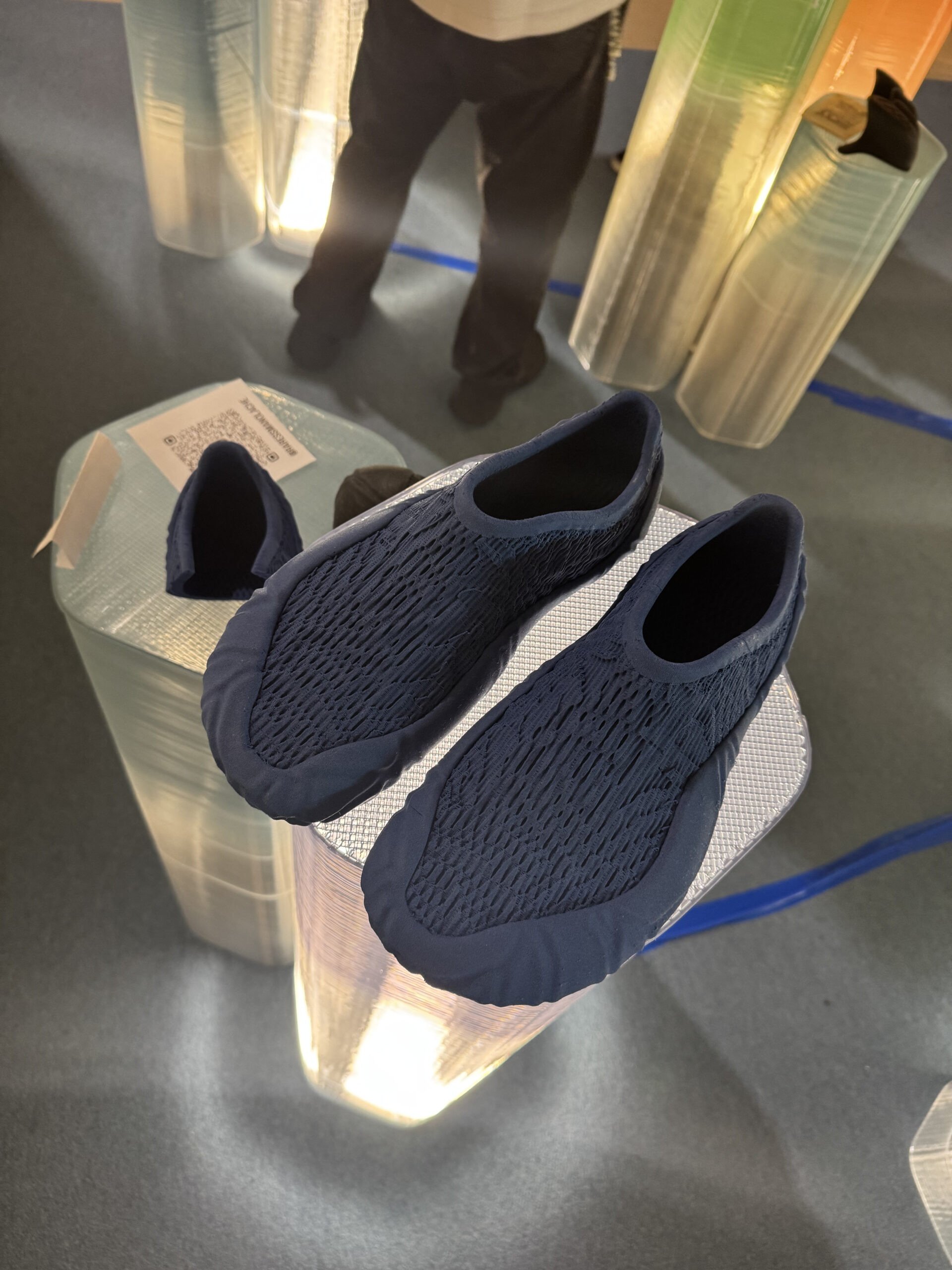
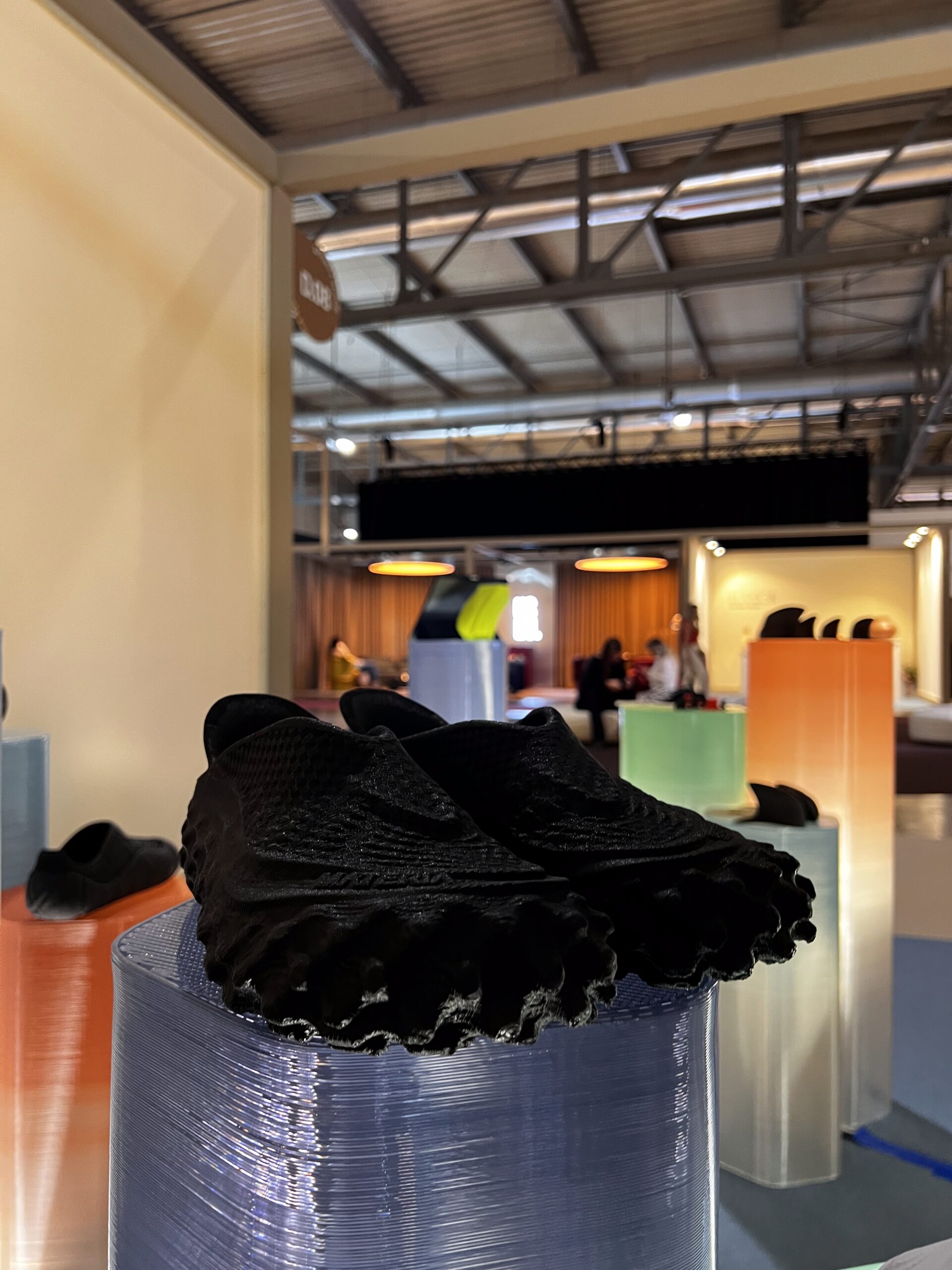
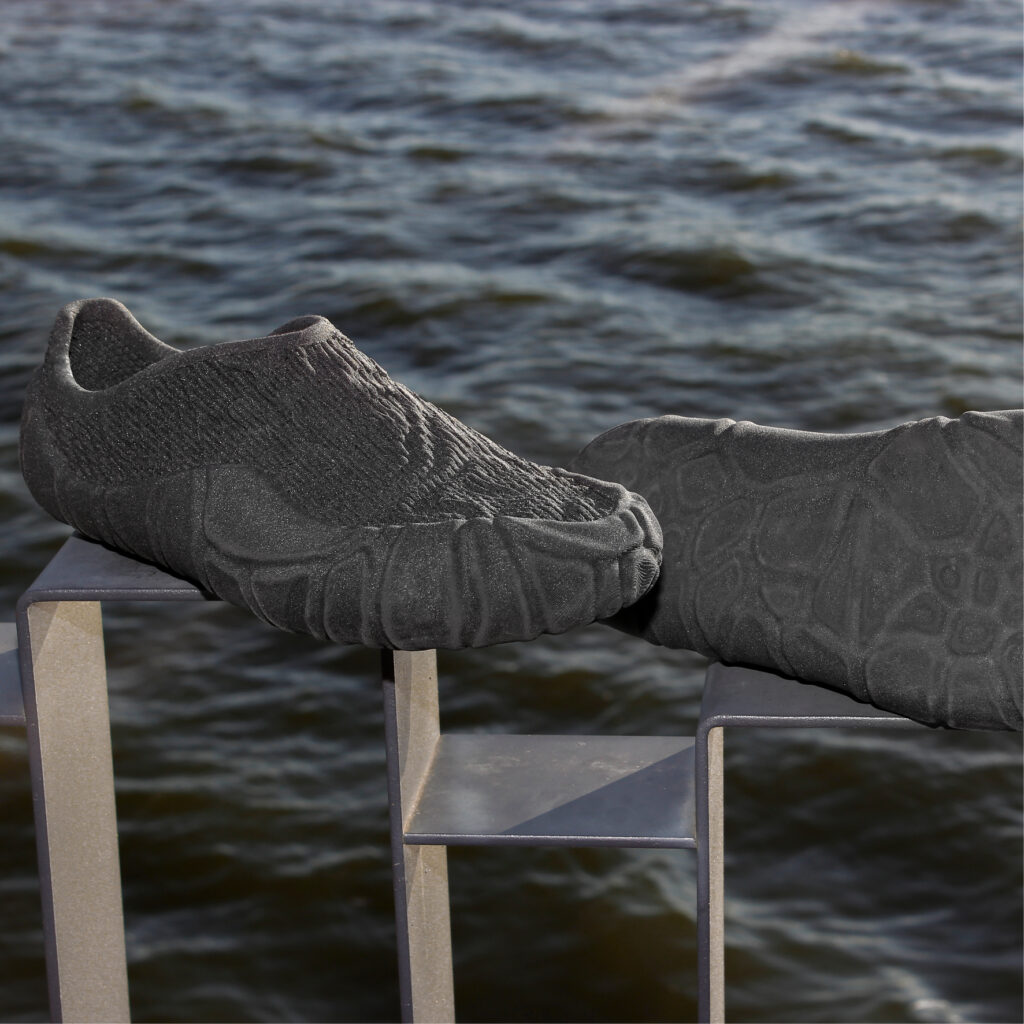
The “Origins” footwear line is an additively manufactured barefoot shoe engineered to strictly support natural foot kinematics. By integrating biomimetic design principles with advanced 3D printing techniques, the footwear provides a conformal fit, unrestricted range of motion, and localized structural support without relying on traditional, restrictive manufacturing methods.
The biomechanical foundation of the shoe centers on its pressure-mapped sole architecture. The plantar interface is anatomically contoured to align with the foot’s natural contact points, which serves to optimize load distribution throughout the gait cycle. By maintaining a minimal profile, the sole is specifically engineered to protect the plantar fascia against kinetic stress while maximizing ground-reaction feedback and proprioceptive awareness.
Complementing the sole is an upper constructed with a wave-patterned structural geometry that facilitates dynamic, multi-directional flexibility. The material possesses high conformal elasticity, allowing it to behave as a low-friction, second skin. This accommodates natural toe splay and foot expansion during impact without restricting the joints’ natural range of motion. Furthermore, the geometric structural pattern inherently increases the material’s permeability, ensuring active breathability and thermal regulation across the foot.
To achieve this level of structural precision, production relies exclusively on in-house additive manufacturing, bypassing standard injection molding and multi-part assembly processes. This layer-by-layer fabrication enables granular, localized material optimization. The deposition process is calibrated to yield variable densities across a single continuous unit.
The sole’s density is tuned to a specific Shore hardness to balance abrasion resistance with impact mitigation, while the upper’s tensile strength is precisely calculated for high-performance structural rebound and tear resistance. Direct oversight of these advanced print parameters ensures consistent layer adhesion and high structural integrity across every unit produced.
Manufacturing process: FDM-printed foamy TPU
Sonia Tramontano
Hydra
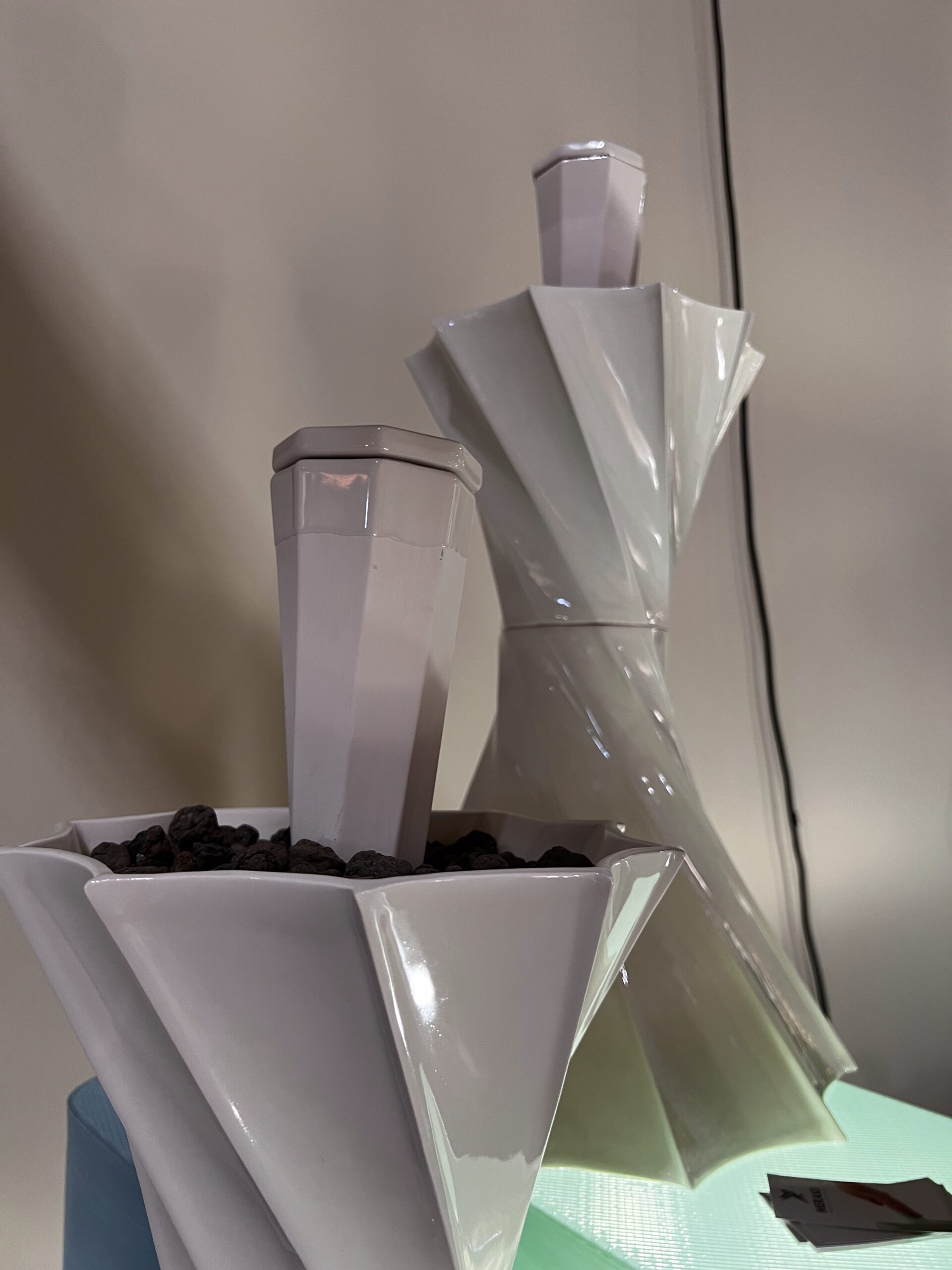
The name carries a hidden etymology. The Greek word clepsydra (water clock) comes from the verb meaning “to steal water.” In a clepsydra, water is taken to measure time. In Hydra, the direction reverses: water is given to the soil, slowly, on the plant’s own schedule.
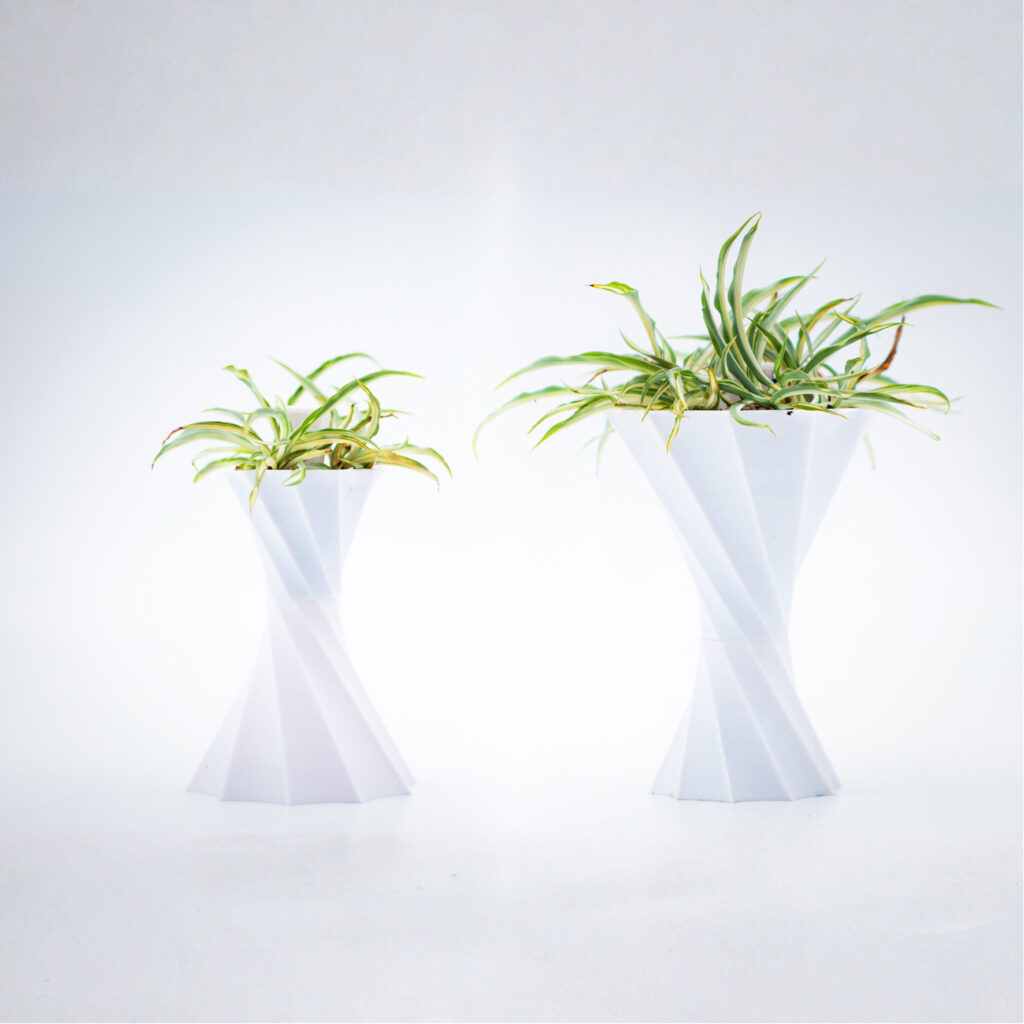
Hydra is a modular ceramic vase with a passive self-watering mechanism. The central reservoir is left intentionally porous, and capillary action draws water gradually into the substrate without pumps, sensors, or any other intervention. The plant gets what it needs over the course of days rather than minutes. The modularity is what makes the object grow with the plant.
Sections can be added or rearranged as the plant develops, so the same vase accommodates a small cutting now and a mature specimen later, without being replaced. The form is meant to keep changing. The choice of ceramic is deliberate: a durable, traditional material set against the disposability that defines most objects in this category.
Production combines 3D printing and slip casting. A digital model is printed in PLA, the PLA print is used to make a plaster mould, and the mould produces the final ceramic form. Computational design in service of a craft technique that has been in use for centuries.
Manufacturing process: 3D-printed PLA contramoulds → plaster mould → slip-cast ceramic
Sonia Tramontano
Prillo
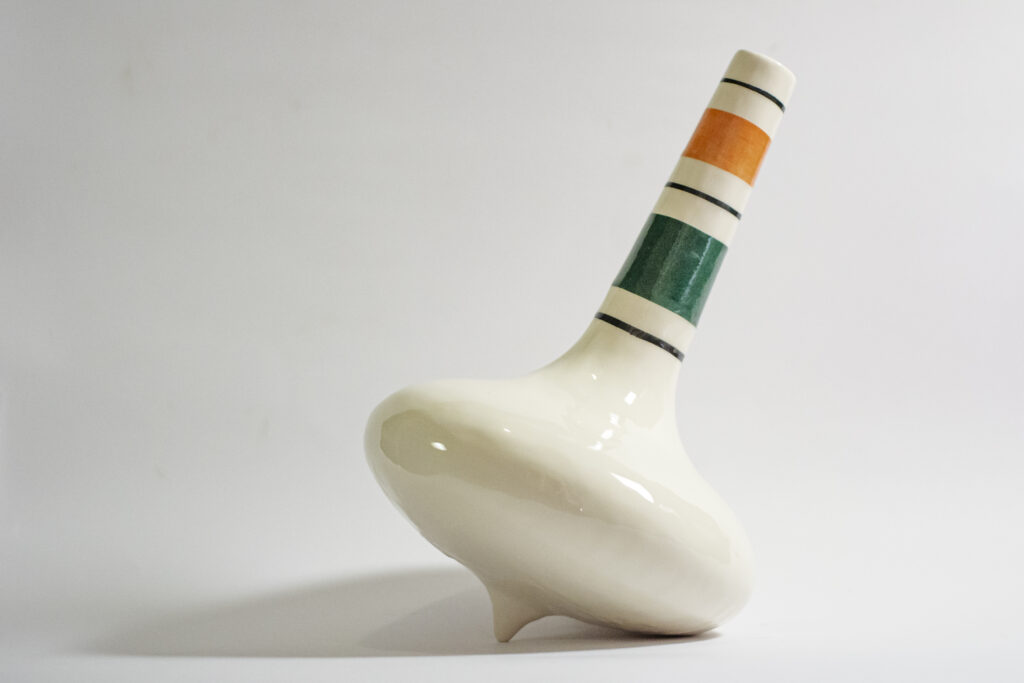
Prillo is a decanter shaped like a spinning top. The two readings are not metaphorical: the form genuinely behaves as both, and the geometry that makes a spinning top stable is the same geometry that makes a decanter work.
The wide base keeps the sediment of aged wine settled at the bottom, away from the glass. The narrow, elongated neck slows the pour, extending the wine’s exposure to air so the aromas open before reaching the drinker. Both functions are encoded in the silhouette, and the silhouetteis borrowed from a toy for reasons that turn out to be physical rather than visual.
Prillo received a Special Mention from the jury at the second edition of the BACC Award in 2023, and went on to become the official award for Best Red and Best White Wine at the 7th and 8th editions of In Vino Civitas in Salerno.
Made from white casting earthenware, prototyped in Rhino and PLA, produced by slip casting in a three-part mould, bisque-fired at 1040°C, finished with coloured engobes and a transparent crystalline glaze. Available in glossy and matte.
Manufacturing process: 3D-printed PLA prototype → three-part plaster mould → slip-cast earthenware, bisque-fired at 1040°C